Philippine Festivals and Events You Need to Experience
No matter the time of year, a festival is being celebrated somewhere in the Philippines. The Filipino people love to celebrate feasts, locally called Pista or Fiesta, with colourful parades, live music, street dancing, and communal feasting that draws locals and foreign visitors alike.
Attending one of these celebrations is one of the most memorable things you can do when you visit the Philippines. It is an unfiltered window into Filipino culture, faith, and history that no beach or museum can match. This guide covers the major festivals by month, with dates where confirmed.
Practical note: Always confirm final dates and schedules with official local government or organiser pages before booking. Some festivals adjust dates year to year, and accommodation in festival towns sells out weeks in advance.
Table of Contents
January Festivals in the Philippines
Feast of the Black Nazarene
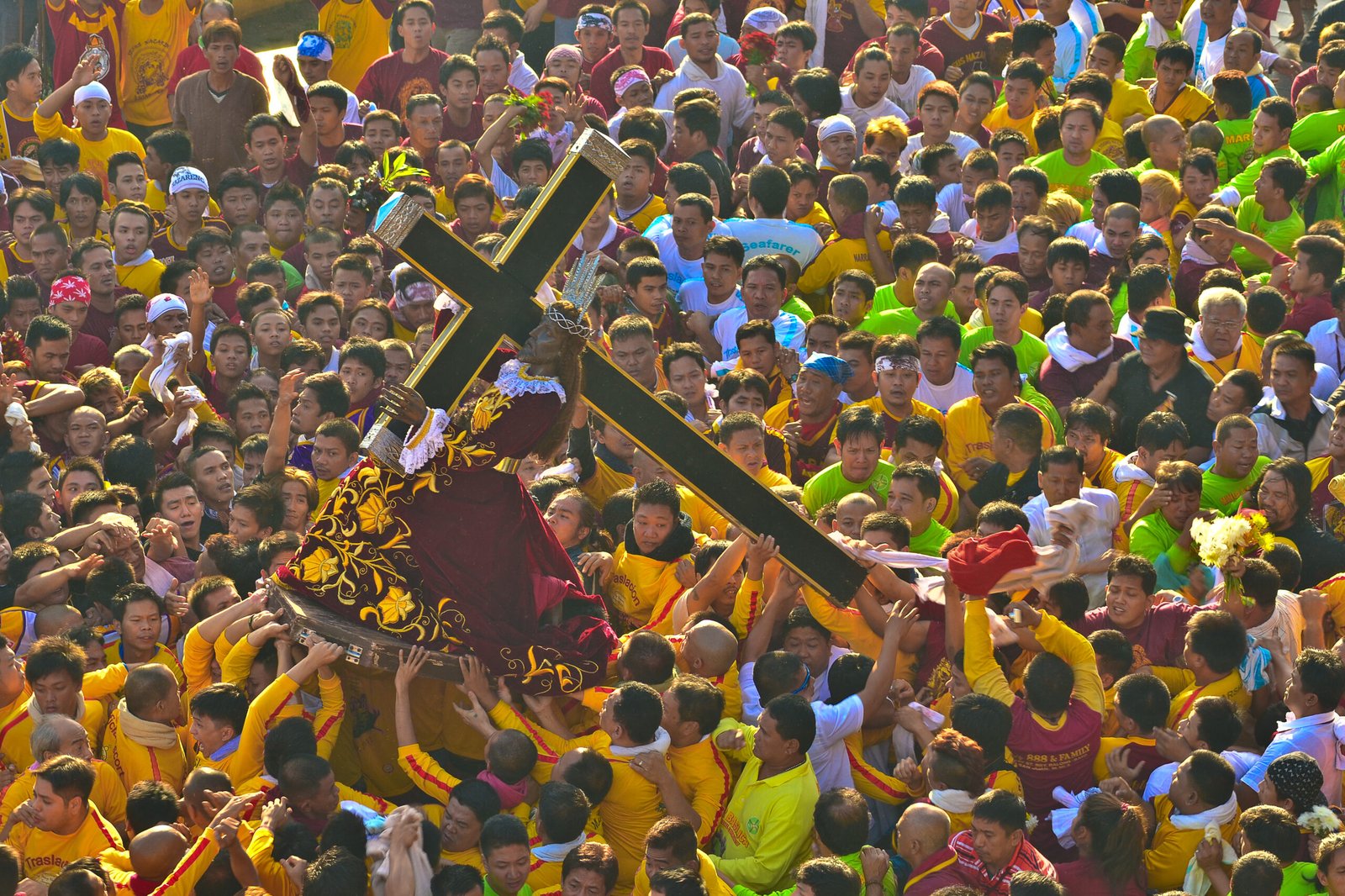
One of the most powerful religious events in the country, the Feast of the Black Nazarene takes place every January 9th in Manila. The Poong Nazareno, a centuries-old dark-wood statue of Jesus Christ, is paraded through the streets of Quiapo in a daylong procession called the traslacion.
Millions of barefoot devotees fill the streets, many throwing white towels toward the statue to have them wiped against the image and tossed back as a blessing. It is an extraordinary display of Filipino Catholic devotion and one of the most densely attended events in the country. Our guide to religion in the Philippines provides more context on the faith traditions behind it.
Sinulog Festival
Sinulog Festival is one of the most famous and most-attended festivals in the Philippines, held on the third Sunday of January in Cebu City. It honours the Santo Niño (the Child Jesus) and commemorates the Christianisation of the Filipino people.
The word “Sinulog” comes from the Cebuano word for water current, referring to the two-steps-forward, one-step-back movement of the festival’s signature dance. Grand street parades, drumbeating, colourful costumes, and the crowd chant of “Pit Señor” (a plea and call to the Lord) fill the city for days.
Read our Cebu City adventure tours guide if you are planning to base yourself there.
Ati-Atihan Festival
Held in Kalibo, Aklan, in the Western Visayas, Ati-Atihan is considered one of the oldest festivals in the Philippines, celebrated for over 800 years. Also in honour of the Santo Niño, it features participants with faces and bodies painted black in tribute to the indigenous Ati people, dancing through the streets in traditional costumes to the relentless beat of drums.
If you are travelling to Boracay in January, a few days in Kalibo for Ati-Atihan is worth building into your itinerary.
Dinagyang Festival
Dinagyang Festival is held on the fourth Sunday of January in Iloilo City, also in Western Visayas. Like Sinulog and Ati-Atihan, it honours the Señor Santo Niño and the traditions of the Ati people. It is known for its highly choreographed, high-energy tribal street performances that attract major crowds and national media coverage.
From Iloilo, Guimaras Island is a 15-minute ferry ride away. Our Guimaras Island adventure tour guide covers island-hopping and beach options to pair with the festival.
February Festivals in the Philippines
Panagbenga (Baguio Flower Festival)
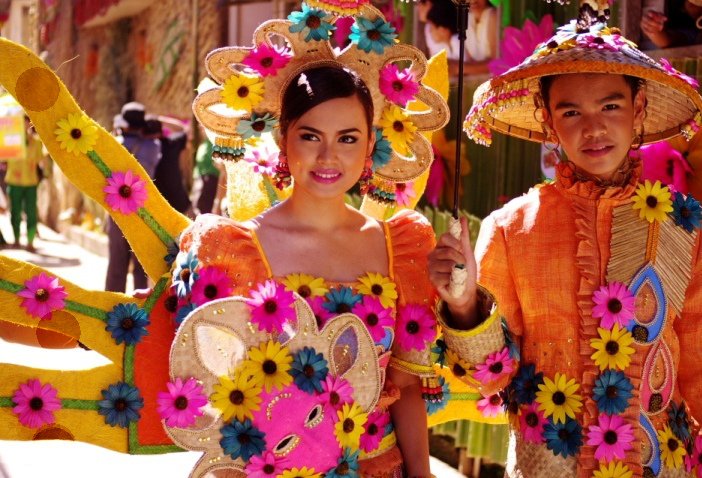
Panagbenga, meaning “season of blooming” in Kankanaey, is the annual flower festival of Baguio City in the Cordillera Administrative Region. The festival typically runs from the first Saturday of February into the first week of March, with the main highlights being the street dance parade and the grand float parade, where floats are covered entirely in fresh flowers.
Baguio’s cool highland climate makes this one of the most pleasant Philippine festivals to attend on foot. See our Baguio City adventure tours guide for where to stay and what else to do in the area.
Hot Air Balloon Festival
The Hot Air Balloon Festival at Clark, Angeles in Pampanga is the biggest aviation sports event in the Philippines. Multi-coloured balloons in various shapes, piloted by skilled aviators from across the world, fill the sky above Clark Freeport. Exact dates vary each year; check official organiser channels before booking.
March and April Festivals in the Philippines
Holy Week
Holy Week is the most widely observed religious event in the Philippines. Spanning from Palm Sunday to Easter Sunday in late March or April, it is a week of masses, processions, and family gatherings observed nationwide.
In San Fernando, Pampanga, the Senakulo re-enactment of the Passion of Christ has become an international draw, where participants physically enact the crucifixion as a personal vow of devotion. It is one of the most intense religious spectacles in Southeast Asia.
Moriones Festival in Marinduque runs across the same Holy Week period. Participants dress as Roman soldiers in hand-carved wooden masks called morion, parading through the streets in a week-long re-enactment of the story of Longinus. It is among the most visually distinctive festivals in the country.
Healing Festival (Witches’ Festival)
Siquijor’s Healing Festival takes place during Holy Week and draws practitioners of folk healing and herbal medicine from across the island. For travelers already exploring the island’s beaches and waterfalls, it adds a cultural layer unlike anything in the mainstream festival calendar. See our Siquijor Island adventure tours guide for trip planning.
May Festivals in the Philippines
Pahiyas Festival
Pahiyas Festival is one of the most photographed festivals in the Philippines. Every May 15th, the town of Lucban in Quezon celebrates the feast of San Isidro Labrador, the patron saint of farmers, by decorating home facades with vibrant vegetables, fruits, rice cakes, and the distinctive kiping, colourful leaf-shaped wafers made from rice flour. The result is streets that look like a living art installation.
Butanding (Whale Shark) Festival
Donsol in Sorsogon is known as the whale shark capital of the world, and the Butanding Festival celebrates these gentle giants with a colourful parade, cultural shows, and conservation-focused activities. Swimming alongside whale sharks in season is a separate, regulated activity that should be booked in advance through accredited local operators.
Manggahan Festival
The Manggahan Festival in Guimaras Island celebrates the province’s famous mango harvest, widely regarded as producing the sweetest mangoes in the world. The month-long celebration includes cultural performances, food fairs, and a showcase of the island’s agricultural heritage. Full trip details are in our Guimaras Island adventure tour guide.
June Festivals in the Philippines
Philippine Independence Day
Philippine Independence Day is a national holiday commemorating the declaration of independence from Spain in 1898. The main ceremony takes place in Manila with a police and military parade attended by the President, a formal address, and a 21-gun salute. Parades and programs are held across every city and municipality in the country.
Pista ng Lechon (Parade of Roast Pigs)
One of the most distinctive fiestas in the country. On June 24th, the town of Balayan in Batangas parades whole roasted pigs dressed in elaborate costumes through the streets, in celebration of the feast of St. John the Baptist. It is exactly as lively and unusual as it sounds.
Pintados-Kasadayan Festival
Held in Tacloban City on June 29th, this cultural-religious festival honours the body-painting traditions of the ancient tattooed warriors of Leyte. The grand parade features folk dancers in striking painted costumes from Leyte and the Western Visayas. See our Leyte adventure tours guide for the broader destination.
August Festivals in the Philippines
Kadayawan Festival
Kadayawan Festival is the biggest annual celebration in Davao City and one of the most culturally rich festivals in Mindanao. It is a thanksgiving for nature’s bounty, honouring the traditions of the 11 indigenous tribes of Davao. The highlight is the Indak-Indak sa Kadayawan, a grand street dancing competition in vibrant indigenous costumes, alongside floral float parades, cultural performances, and food fairs.
Davao is also the gateway to Mount Apo, the highest peak in the Philippines, for travelers who want to combine the festival with an adventure itinerary.
September Festivals in the Philippines
Peñafrancia Festival
The Peñafrancia Festival in Naga City, Camarines Sur is one of the largest religious gatherings in Asia, drawing millions of devotees to honour Our Lady of Peñafrancia, a wooden statue of the Virgin Mary. The highlight is the fluvial procession, where the image is carried by boat along the Naga River in a powerful display of communal faith. The festival typically runs across ten days in September.
T’boli Tribal Festival
The T’boli Tribal Festival in South Cotabato, Mindanao, is a gathering of major ethnolinguistic groups showcasing indigenous culture, crafts, and dance. The T’boli people are renowned for their T’nalak weaving, a distinctive abaca cloth tradition. This is one of the most authentic indigenous cultural events on the festival calendar.
October Festivals in the Philippines
MassKara Festival
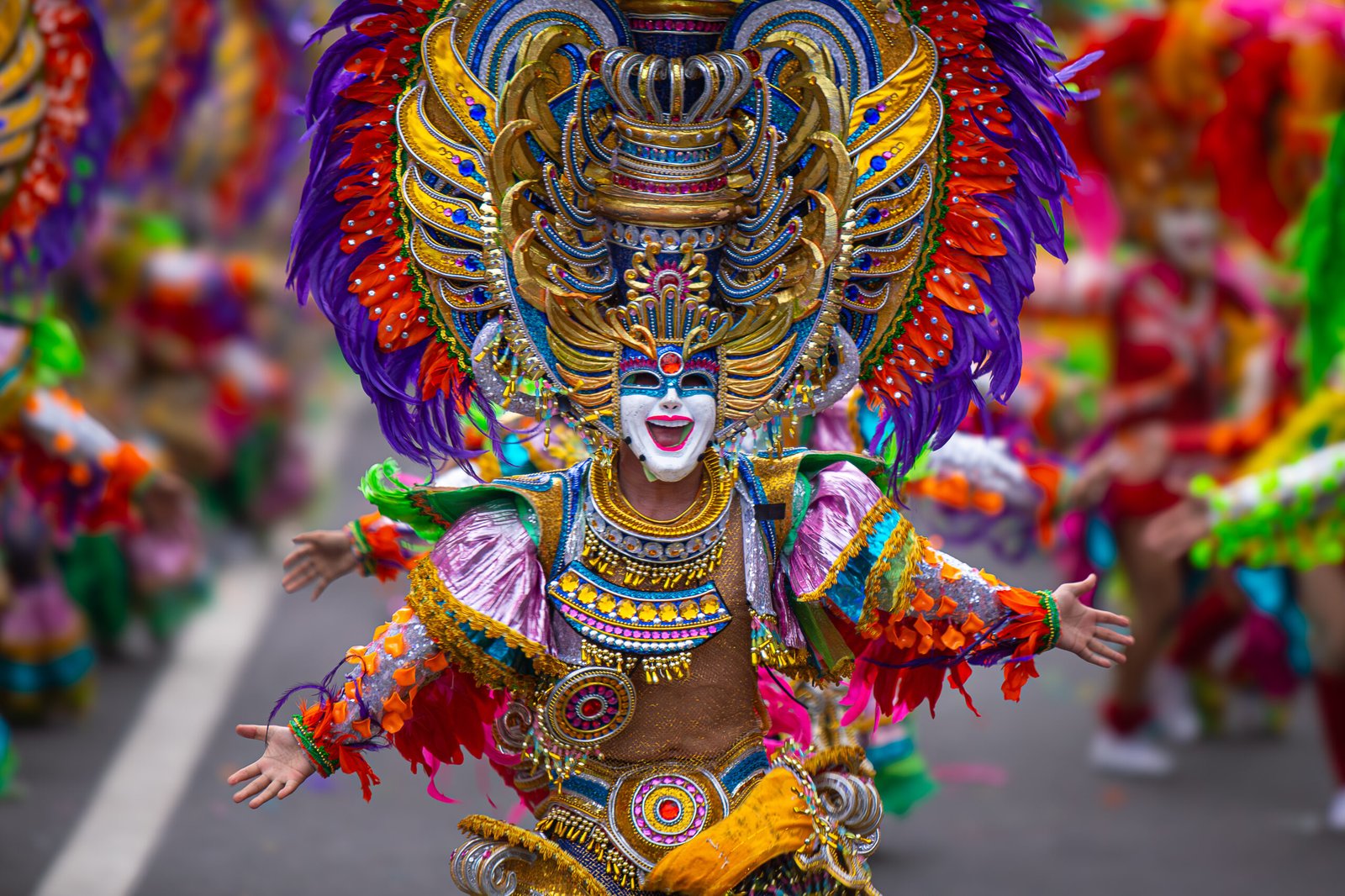
MassKara Festival is one of the most celebrated festivals in the Philippines, held on the third Sunday of October in Bacolod City, Negros Occidental. The name combines the English word “mass” (many) and the Spanish “cara” (face), reflecting the festival’s signature: thousands of performers wearing brightly painted smiling masks dancing through the streets.
The festival was born in 1980 during a period of economic crisis for Bacolod, as a way of celebrating resilience and community spirit. It is now known as the “Festival of Smiles” and draws visitors from across the country and internationally. Book accommodation in Bacolod well in advance, as the city fills up weeks before the main events.
Lanzones Festival
Camiguin Island celebrates its famous lanzones fruit with street dancing, cultural shows, and parades. Lanzones is a sweet tropical fruit that grows particularly well on Camiguin’s volcanic soil. The festival is a relaxed, community-centred event that pairs well with the island’s hot springs, waterfalls, and diving.
Regatta de Zamboanga
Part of the month-long Zamboanga Hermosa Festival, this event features vinta races: traditional outrigger boats rigged with brilliantly coloured sails, paddled across the water in competition. The vinta is one of the most visually striking traditional vessels in the Philippines, and the regatta is its most spectacular showcase.
November Festivals in the Philippines
Higantes Festival
Angono in Rizal is known as the art capital of the Philippines, and the Higantes Festival reflects that. Hundreds of giant papier-mâché figures (higantes), some standing over three metres tall, parade through the town. The effigies range from playful to political, and the festival has an irreverent, creative energy unlike any other in the country.
La Union Surfing Festival
The La Union Surf Festival draws surfers and ocean culture enthusiasts to one of the most popular breaks in northern Luzon. Activities include surf competitions, wellness events, art installations, and live music. Exact dates vary by year; check the La Union Tourism Office for the current schedule.
December Festivals in the Philippines
Giant Lantern Festival
San Fernando City in Pampanga is known as the Christmas Capital of the Philippines, and the Giant Lantern Festival is its centrepiece. Enormous, mechanised lanterns up to six metres in diameter light up in kaleidoscopic colour displays to the beat of Christmas music. The spectacle draws visitors from across the country and is one of the most visually stunning events on the Philippine calendar.
Maytinis Festival
Maytinis, from the Latin word for early morning prayer, takes place every Christmas Eve in Kawit, Cavite. The event re-enacts the journey of St. Joseph and the Virgin Mary in search of an inn, carried through the community in procession and prayer. It is a deeply local celebration of the Christmas story in its religious form.
Christmas in the Philippines
No overview of Philippine festivals is complete without noting that Christmas in the Philippines is considered the longest in the world. It begins in September and continues through January, encompassing the Misa de Gallo (nine dawn masses before Christmas), gift-giving, family reunions, and the return of OFWs (Overseas Filipino Workers) from abroad. Streets are lined with parols (star-shaped lanterns), malls extend their hours, and the national mood lifts noticeably from the first “Ber month.” Read more in our article on why Filipinos celebrate Christmas for four months.

Practical Tips for Attending Philippine Festivals
Book accommodation early. Festival towns sell out weeks in advance, particularly for Sinulog (Cebu), Panagbenga (Baguio), Dinagyang (Iloilo), and MassKara (Bacolod). Book as soon as you confirm your dates.
Confirm dates before you travel. Festival dates shift year to year and are sometimes adjusted by local governments. Always verify with official city or organiser pages before booking flights.
Bring cash. Food stalls, souvenir vendors, and local transport around festival events are almost always cash-only. See our Philippines currency exchange guide for ATM and exchange tips.
Learn a few local words. Filipinos are genuinely happy to share stories about their festival and province with curious visitors. A few words of greeting in Filipino (Tagalog) go further than you expect.
Check the weather. Festival season spans the whole year, but the Philippines has distinct wet and dry patterns that vary by region. Our weather in the Philippines guide helps you match your travel dates to the right conditions.
For a complete trip planning overview, check our Philippines travel checklist before you book anything.
Follows us on Facebook
Tips and Tricks
- Bringing Regulated Items
- Transport Options
- Popular Destinations
- Religion in the Philippines
Travel Adventures Diary
- Adventure Tours in Manila
- Adventure Tours on Bantayan Island
- Adventure Tours in Cebu
- Adventure Tours on the Island of Negros
- Adventure Tours Siquijor
- Adventure Tours in Guimaras
- Adventure Tours Gigantes
- Adventure Tours in Metro Manila
- Adventure Tours Puerto Princesa
- Adventure Tours in El Nido
- Adventure Tours in El Nido and Puerto Princesa
- Adventure Tours Baguio City
- Adventure Tours Sagada
- Adventure Tours Buscalan
- Adventure Tours Banaue
- Adventure Tours Pangasinan
- Adventure Tours Hundred Islands
- Adventure Tours in Metro Manila
- Adventure Tours in Leyte
- The Bamboo Paraiso Beach Resort
- Best Tour in Pangasinan