
Best Filipino Foods in the Philippines: The Complete Guide (2026)
Filipino cuisine is one of the most diverse and exciting in Southeast Asia — shaped by centuries of Malay, Chinese, Spanish, and American influence. Food varies dramatically from region to region, but one constant ties every table together: rice. Whether you are eating in a roadside carinderia, a seaside sutukil stall, or a celebrated restaurant, almost every Filipino meal arrives with a generous serving of steamed white rice.
What truly elevates Filipino food is the culture of sawsawan — the practice of customizing each bite with dipping sauces made from combinations of soy sauce, vinegar, fish sauce, calamansi (Philippine lime), and garlic. No two tables season their food exactly the same way, and that freedom is part of what makes eating in the Philippines so enjoyable.
If you are planning a trip, explore the most popular destinations in the Philippines to match your food journey with the right region. First-time visitors can also check where to go in the Philippines for the first time for a practical starting point.
Quick Answers: Common Questions About Filipino Food
What is the most famous Filipino dish? Adobo — slow-cooked meat in soy sauce, vinegar, garlic, and bay leaves — is the dish most Filipinos name as the national food. Sinigang and lechon are close rivals for that title.
What is the national fruit of the Philippines? The mango (mangga), specifically the golden carabao variety, is the national fruit. Guimaras Island is considered the Mango Capital of the country.
What is halo-halo? Halo-halo is the Philippines’ most beloved dessert: a tall glass of shaved ice, evaporated milk, and layered toppings including sweetened beans, coconut gel, jelly, banana, leche flan, and ube ice cream.
What is balut? Balut is a fertilized duck egg with a developed embryo, boiled and eaten from the shell — the Philippines’ most famous exotic street food.
Table of Contents
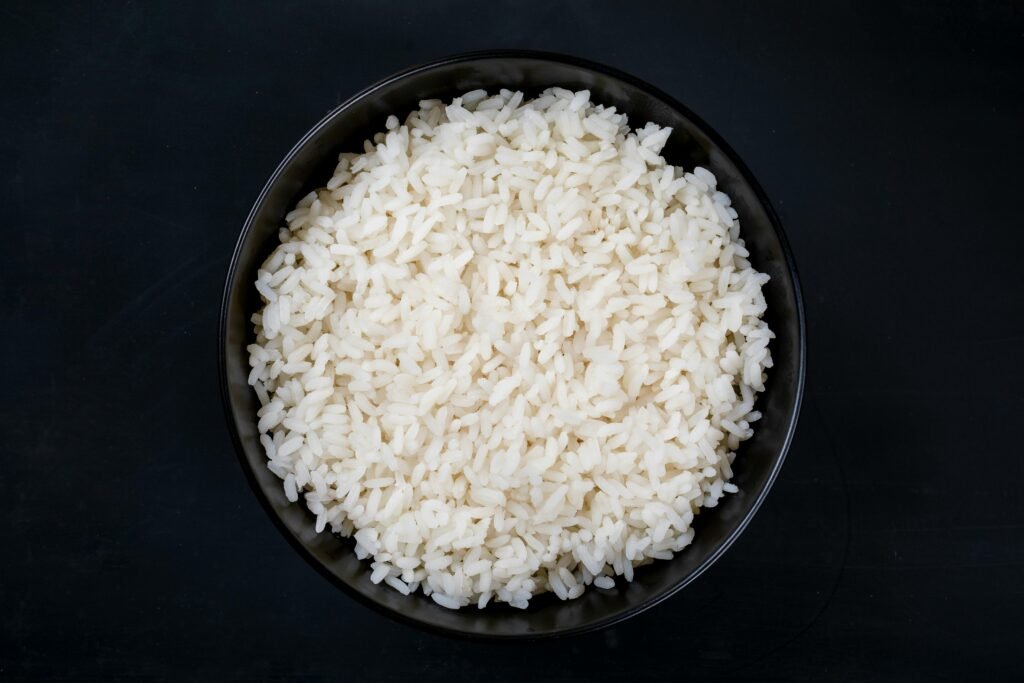
Why Is Rice the Most Important Food in the Philippines?
Rice is not just a side dish in the Philippines — it is the center of every meal. The Philippines is among the top rice-producing nations in Asia, ranking 8th globally in production, with vast rice fields across Luzon, Western Visayas, and Central Mindanao. Despite this output, domestic production cannot keep pace with demand: the Philippines is currently the world’s largest rice importer, with imports projected to reach a record 5.5 million metric tons in 2026, sourced primarily from Vietnam and Thailand.
Filipino rice dishes go far beyond plain steamed white rice. Leftover rice becomes sinangag (garlic fried rice), a staple of the beloved Filipino breakfast. More indulgent preparations include:
- Aligue rice — tossed in rich orange crab fat
- Bagoong rice — mixed with fermented shrimp paste and green mango
- Sisig rice — topped with sizzling chopped pork and liver
- Adobo rice — cooked in leftover adobo sauce until each grain is glossy and savory
The Philippines introduced the Rice Tariffication Law in 2019, transitioning imports from quotas to tariffs. While this has helped stabilize consumer supply and prices, local farming organizations continue to advocate for policies protecting Filipino rice farmers.
Top Traditional Dishes of the Philippines
Chicken or Pork Adobo
Adobo is the dish most Filipinos would name if asked to define their cuisine in a single meal. Meat — most commonly pork, chicken, or a combination — is marinated and slow-cooked in a sauce of soy sauce, vinegar, garlic, bay leaves, and black pepper. The word comes from the Spanish adobar (to marinate), but the technique of preserving meat in acid predates Spanish colonization and is uniquely Filipino in character.
The key to great adobo is patience: marinating the meat for at least 2 to 12 hours before cooking allows the flavors to penetrate deeply. The sauce reduces to a dark, glossy glaze that clings to every piece. Regional variations exist across the archipelago, with some provinces adding coconut milk, turmeric, or chilli. All versions are best eaten with fluffy steamed white rice to absorb the tangy, savory sauce.
Best for: First-time visitors wanting to understand Filipino flavor profiles. Where to find it: Every carinderia, turo-turo, and home kitchen in the country.
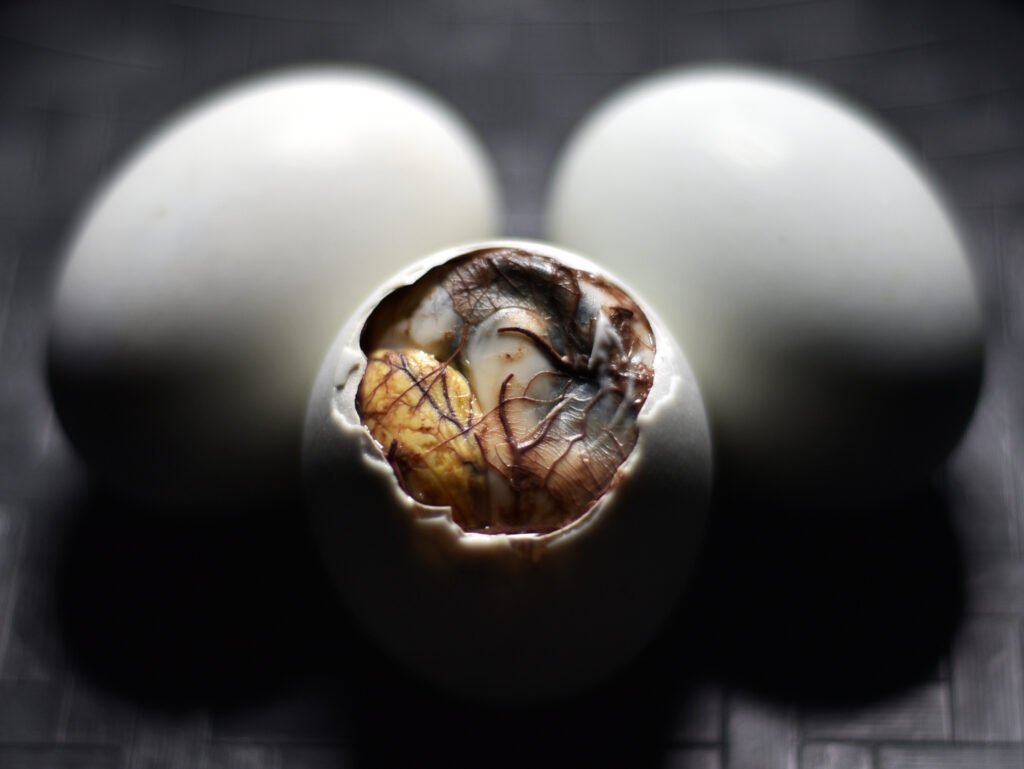
Balut
Balut is the Philippines’ most famous exotic street food: a fertilized duck egg with a developed embryo inside, boiled and eaten directly from the shell. It is typically served with a pinch of salt or a splash of vinegar and best enjoyed hot, usually from street vendors in the late afternoon or evening.
You will find balut sold at markets, along busy sidewalks, and from vendors carrying baskets through residential streets across the country. A single balut costs roughly PHP 25 to PHP 35 from street vendors in 2026, though prices vary by location. Beyond its reputation as a daring food challenge for tourists, balut is a genuine everyday snack for millions of Filipinos and is widely considered an energy-boosting, protein-rich food.
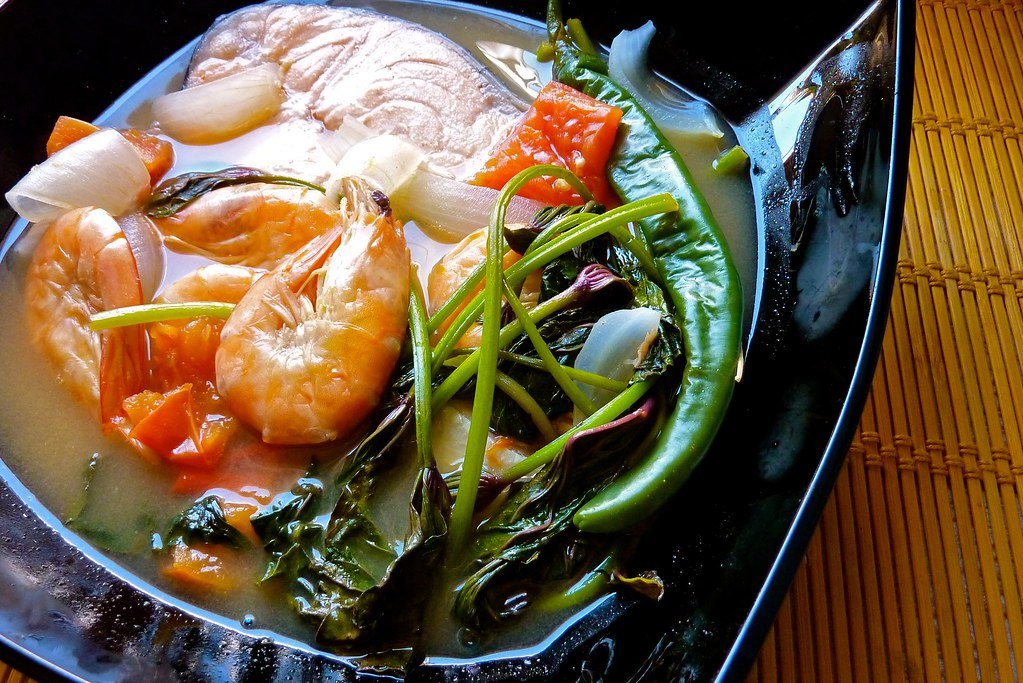
Sinigang
Sinigang is the definitive Filipino comfort soup: a sour tamarind-based stew loaded with vegetables and your choice of protein — most commonly pork belly, shrimp, milkfish (bangus), or beef. The characteristic sourness traditionally comes from tamarind, though cooks across different regions use kamias (bilimbi), green mango, or calamansi as alternatives.
The broth is sharp, clean, and deeply satisfying, balanced by tomatoes, onions, water spinach (kangkong), long beans, eggplant, and radish.
Best for: Anyone seeking Filipino comfort food at its most elemental. Pro tip: Ask for extra kangkong and a squeeze of calamansi at the table.
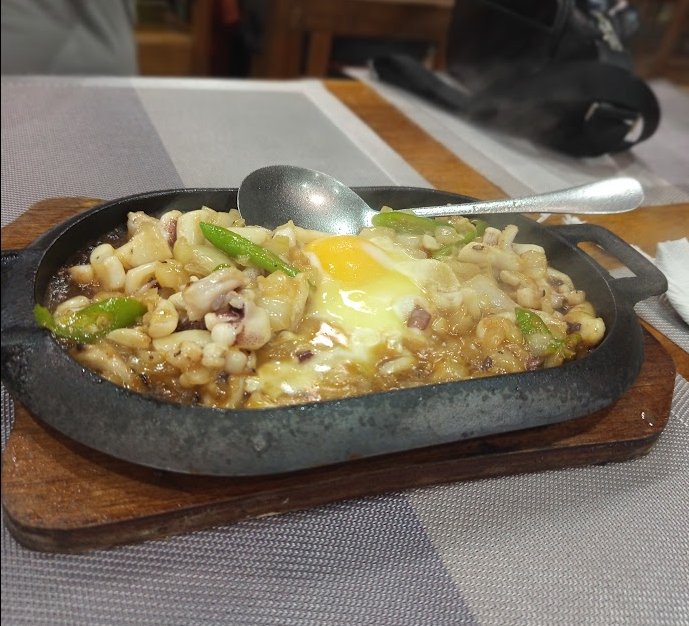
Sisig
Sisig is a sizzling dish of chopped pork cheek, pork face, and chicken liver, served on a scorching cast-iron plate, born in the culinary tradition of Pampanga (widely regarded as the food capital of the Philippines). A raw egg is often cracked on top at the table and stirred through as residual heat cooks it into a creamy binding sauce.
The dish is credited to the late Lucia “Aling Lucing” Cunanan, who established Aling Lucing’s in Angeles City in 1974, reinventing an older vinegar-soaked preparation using charred grilled pig parts. Her version became nationally famous and sparked the modern sisig tradition. It is now the undisputed king of pulutan (Filipino bar food) and is served at everything from hole-in-the-wall eateries to fine-dining restaurants.
Where to try the original: Aling Lucing’s, Glaciano Valdez St., Angeles City, Pampanga.
Kare-Kare
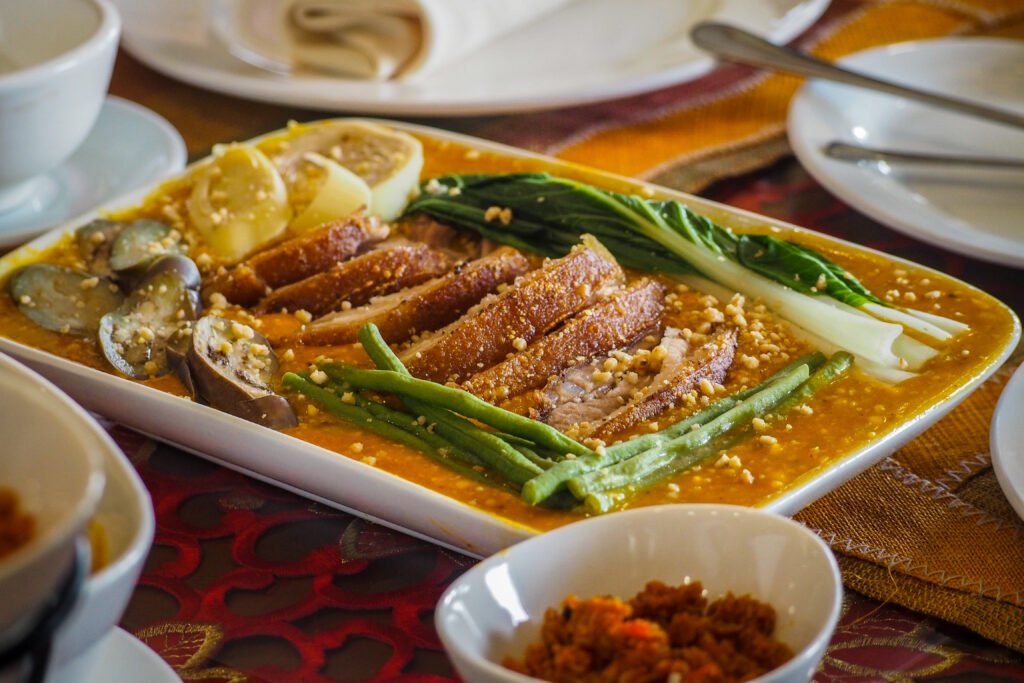
Kare-kare is a rich, slow-cooked oxtail and tripe stew simmered in a thick, golden peanut sauce with banana blossom, eggplant, and long beans. The stew itself is mild and almost sweet, which is why it is always served alongside bagoong alamang (salted fermented shrimp paste), whose pungency cuts through the richness of the peanut broth.
The origins of kare-kare are debated, with at least three major theories: one traces it to the Moro peoples and pre-colonial kari dishes from the southern Philippines; another credits Indian sepoys who settled in the Philippines after the British occupation of Manila (1762–1764) and adapted their curry recipes using local ingredients; a third points to its development in Kapampangan kitchens in Pampanga. Whatever its origins, it is considered one of the most technically demanding dishes in traditional Filipino cooking. Getting the sauce to the right texture — thick enough to coat but loose enough to flow — takes practice.
Menudo
Filipino menudo is a hearty pork stew entirely distinct from its Mexican namesake. Chunks of pork, liver, and chorizo are braised with potatoes, carrots, tomatoes, chickpeas, and raisins in a slightly sweet tomato-based sauce. The combination of savory pork, sweet raisins, and soft potato makes it one of the most universally loved dishes at Filipino family tables and fiestas.
Lechon
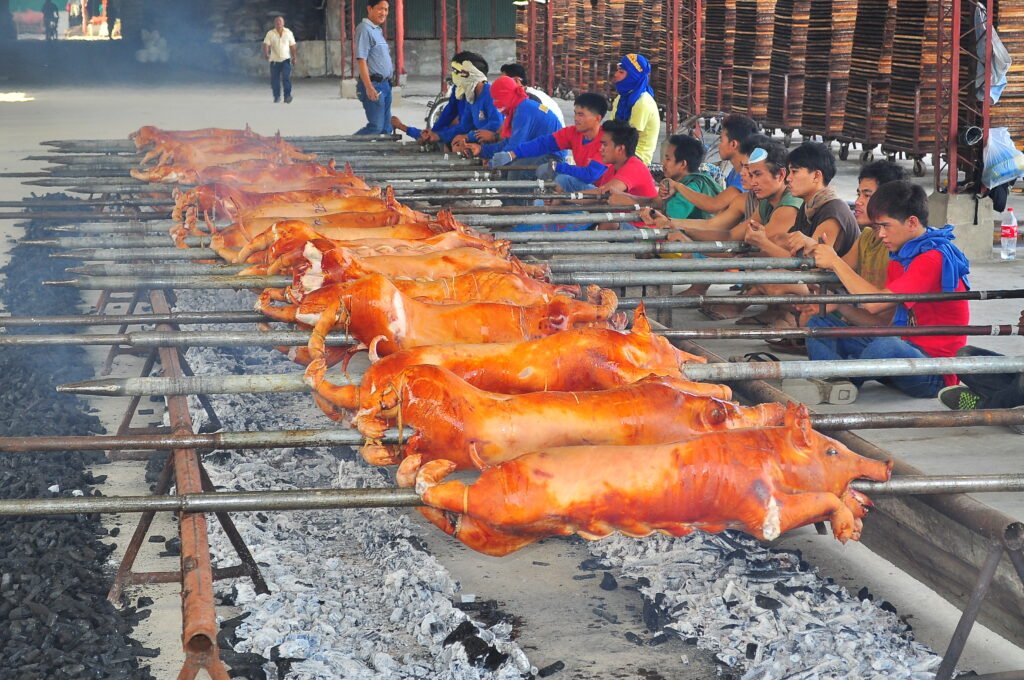
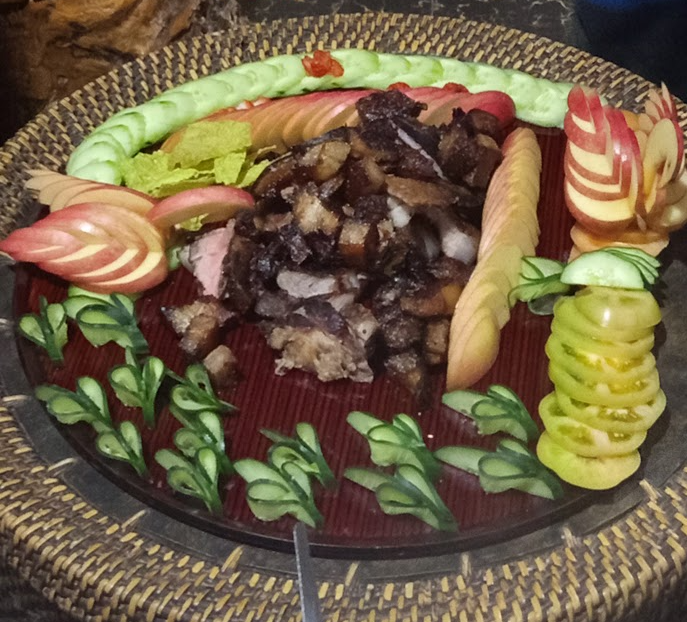
Lechon — the whole-roasted pig — is the undisputed centerpiece of Filipino celebration cooking. Prepared for fiestas, weddings, birthdays, and holidays across every region of the Philippines, a beautifully roasted lechon with lacquered mahogany skin represents abundance, joy, and community.
Cebu lechon is internationally the most celebrated variety, stuffed with lemongrass, garlic, and local herbs before being slow-roasted over charcoal. The result is crisp, paper-thin skin and deeply seasoned meat that needs no dipping sauce. Read the full Cebu City and South Cebu guide to plan a dedicated food trip to try it at the source.
Tapsilog
Tapsilog is the most iconic Filipino breakfast plate: a combination of tapa (thin cured beef), sinangag (garlic fried rice), and itlog (a fried egg, sunny-side up). It is filling, fast to prepare, and deeply satisfying at any hour of the day.
The -silog format is one of the Philippines’ great culinary innovations:
- Longsilog — longganisa (local sausage) + garlic rice + egg
- Tocilog — tocino (sweet cured pork) + garlic rice + egg
- Cornsilog — corned beef + garlic rice + egg
These variations are found at every carinderia, turo-turo, and fast food chain across the country. If you want to understand how Filipinos eat on an ordinary morning, a tapsilog breakfast is where to start.
Filipino BBQ (Inihaw)
Filipino barbecue is street food at its most communal. Pork, chicken, and various internal organs are marinated in soy sauce, banana ketchup, calamansi juice, garlic, onion, and brown sugar, then threaded onto bamboo skewers and grilled over charcoal. The marinade caramelizes over the heat, creating a smoky, sweet-savory crust.
Popular skewer options include:
- Isaw — chicken intestines
- Adidas — chicken feet
- Betamax — solidified pork or chicken blood
- Tenga — pig ears
Best served with puso (hanging rice) or plain rice and a vinegar-chilli dipping sauce. For the best BBQ experience in Cebu, head to Larsian BBQ Market near Fuente Osmena Circle — a must on any Cebu City food itinerary.
Chicken Inasal
Chicken inasal originated in Bacolod City, Negros Occidental, and has become one of the most beloved grilled dishes in the Philippines. A whole chicken leg or breast is marinated in calamansi, coconut vinegar, garlic, lemongrass, and annatto (achuete), then grilled over charcoal and continuously basted with seasoned butter and chicken oil.
The distinguishing ritual: order an extra bowl of chicken oil to pour over your garlic rice, transforming it into one of the greatest rice dishes imaginable. Explore Negros Island to try inasal in its birthplace.
Lechon Manok
Lechon manok (roasted chicken) is a whole chicken spit-roasted slowly over charcoal or in a large rotisserie oven, stuffed with lemongrass, garlic, and onions. The skin turns golden and crispy while the meat remains juicy. Chains like Andok’s and Sr. Pedro have built empires on this dish, with stores on virtually every major street in every Philippine city.
Pandesal
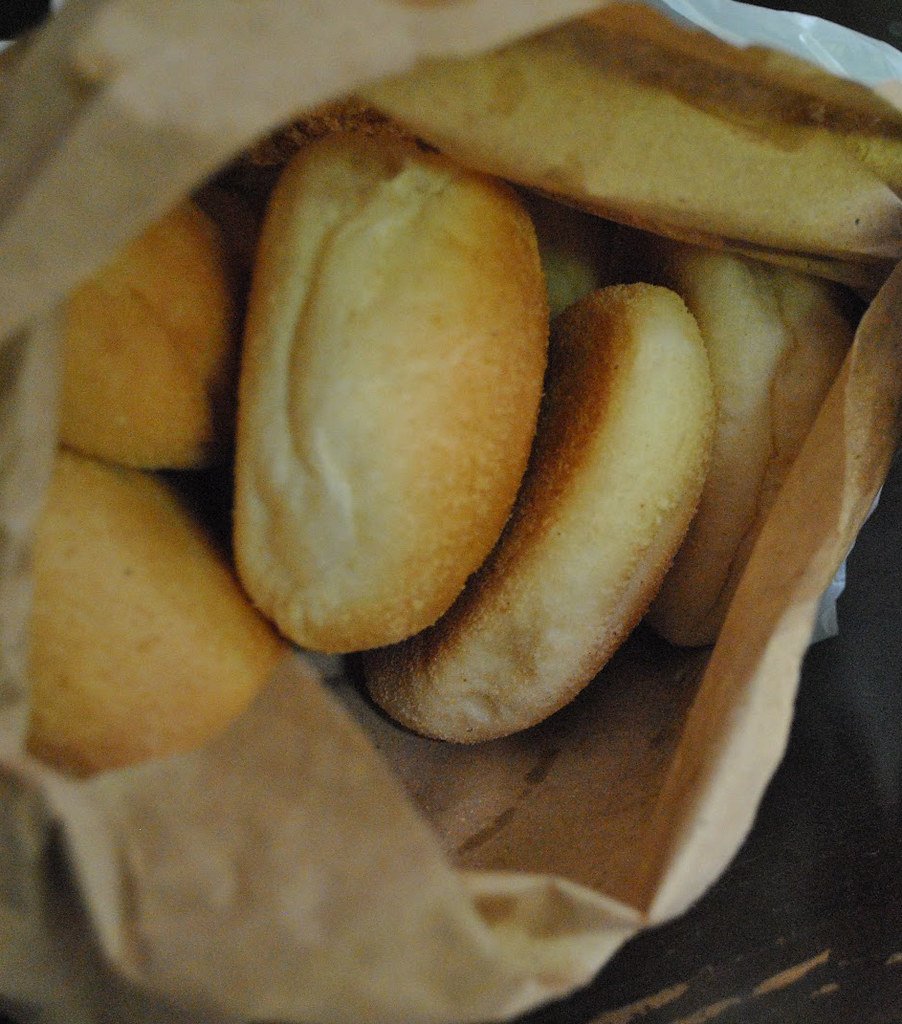
Pandesal is the soul of the Filipino breakfast table — soft, slightly sweet bread rolls dusted with breadcrumbs, baked fresh throughout the day at local bakeries (panderia) and eaten while still warm, ideally with butter, kesong puti (white cheese), or dipped directly into hot coffee or chocolate.
Classic pandesal fillings include ube halaya (purple yam jam), coco jam, cream cheese, longganisa, corned beef, and scrambled egg. The bread itself has Spanish roots (pan de sal means “bread of salt”), but its soft, pillowy texture is entirely Filipino. Related breads worth trying at any local bakery: mamon (sponge cake), Spanish bread, and pan de coco.
Philippine Food Specialties: Fruits, Vegetables & Seafood
Tropical Fruits of the Philippines
The Philippines is one of the most biodiverse fruit-producing nations in the world. Essential tropical fruits of the Philippines to seek out:
Mango (Mangga) is the national fruit of the Philippines. The golden carabao variety is extraordinary eaten fresh, dried, or blended into shakes. Guimaras Island is known as the Mango Capital of the Philippines and is worth visiting for the fruit alone.
Coconut (Buko) is found everywhere year-round and is central to Filipino cooking, beverages, and desserts. Young buko juice drunk straight from the shell is one of the great simple pleasures of traveling in the tropics.
Banana (Saging) comes in a remarkable variety in the Philippines — from the sweet latundan and lacatan for eating fresh, to the starchy saba used for cooking and the beloved street snack turon (banana spring roll).
Rambutan is available from August to October, recognizable by its red spiky peel and sweet lychee-like flesh.
Lanzones ripen from August to December and are celebrated each October at the Lanzones Festival in Camiguin.
Durian grows primarily in Davao, Mindanao. While its powerful aroma is divisive, its custard-like flesh is beloved by millions. Try durian candy or durian ice cream as a gentler introduction.
Jackfruit (Langka) — ripe jackfruit is sweet and aromatic, perfect for desserts. Unripe jackfruit is cooked in coconut milk as a savory vegetable dish called ginataang langka.
Fresh Vegetables
The mountainous highlands of the Philippines produce excellent seasonal vegetables. The most common in Filipino cooking include ampalaya (bitter melon), sayote (chayote), okra, sitaw (long beans), kangkong (water spinach), and eggplant. Two of the most popular vegetable preparations are pakbet (mixed vegetables sautéed with bagoong fish paste, an Ilocano classic) and chop suey (stir-fried vegetables with oyster or soy sauce).
The Cordillera highlands around Baguio City and Sagada are the best places to find fresh highland vegetables, including strawberries, lettuce, carrots, and cabbage.
Fresh Fish and Seafood
An archipelago of more than 7,600 islands means the Philippines has access to some of the freshest and most diverse seafood in Southeast Asia. Popular seafood includes shrimp, squid, lobster, oysters, crabs, and mussels, all of which can be ordered via paluto (you choose the fresh seafood, they cook it your way: grilled, fried, steamed, or stewed).
Key fish varieties include tuna, lapu-lapu (grouper), red snapper, tanigue (mackerel), bangus (milkfish), tilapia, anchovies, and sardines. For visitors with dietary preferences, the vegetarian and vegan travel guide to the Philippines covers what to look for at markets and restaurants across the country.
Popular Filipino Desserts
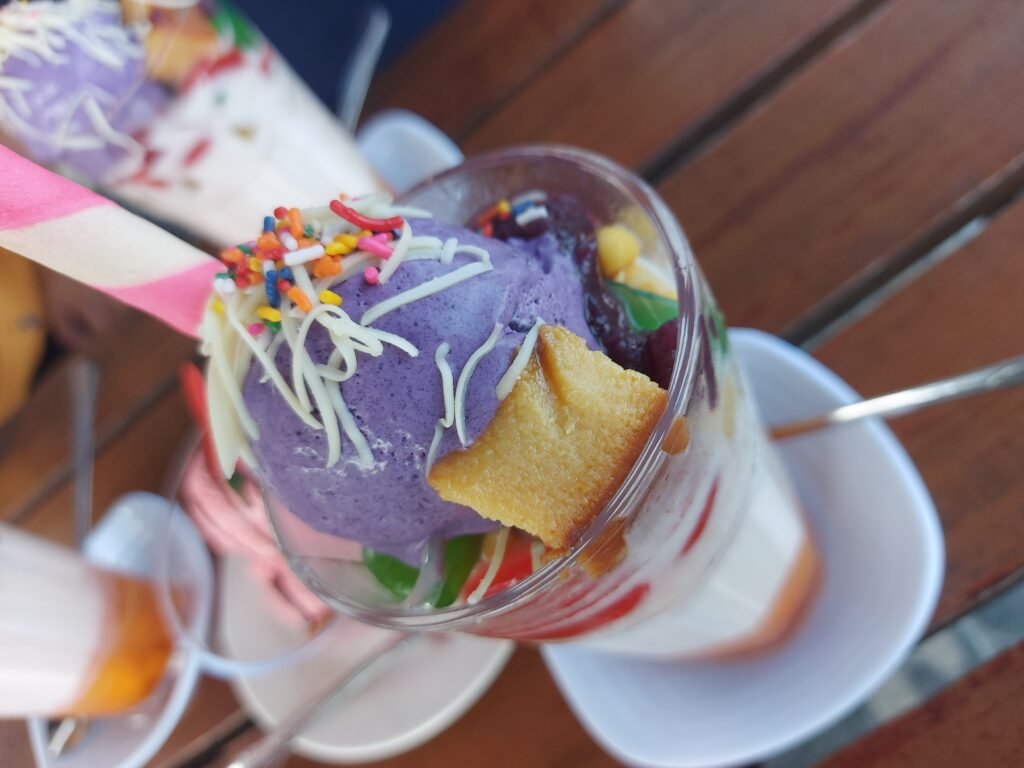
Halo-Halo is the undisputed champion of Filipino desserts: a tall glass of shaved ice, evaporated milk, and an array of toppings including sweetened beans, nata de coco (coconut gel), kaong (sugar palm fruit), gulaman (agar jelly), saba banana, leche flan, and a generous scoop of ube ice cream. Best enjoyed from May to July during the Philippine summer — check the Philippines weather guide to time your visit.
Kakanin refers to a broad category of traditional Filipino rice cakes made from glutinous rice, coconut milk, and sugar. Essential kakanin to try: biko (sticky rice cake), suman (rice wrapped in banana leaves), bibingka (baked rice cake with salted egg and cheese, especially popular at Christmas), puto (steamed white rice muffins), and sapin-sapin (layered colored rice cake).
Ube Halaya is made from purple yam (ube) boiled and mashed with condensed milk and butter into a vivid violet jam. It is eaten on its own, spread on pandesal, or used as the base for ube ice cream, ube cake, and ube-flavored products that have taken international food markets by storm since 2020.
Philippine Coffee: A World-Class and Underrated Product
The Philippines produces five distinct varieties of coffee bean, making it one of the few countries in the world capable of growing all commercially cultivated coffee types.
Arabica grows in the cool highlands of the Cordillera region (Benguet, Mountain Province) and parts of Mindanao. The best place to taste fresh Cordillera arabica is in Baguio City, where local cafés serve single-origin highland beans. It produces a refined cup with complex acidity and aromatic depth.
Robusta thrives in lowlands, including Cavite, Bulacan, and Mindoro. Earthy, strong, and high in caffeine, it is commonly used in instant coffee blends.
Liberica (Kapeng Barako) is grown in Batangas and Cavite. Bold, slightly smoky, and almost fruity in aroma, barako coffee has a cult following in the Philippines and is considered a national treasure by coffee purists. The Philippine Coffee Board promotes barako and other local varieties internationally.
Excelsa grows in Batangas, Quezon province, and the Bicol region, producing a sweet, fruity-aromatic cup that is rarely found outside the Philippines.
Civet Coffee (Kape Alamid) is among the rarest and most expensive coffees in the world. Coffee cherries eaten and naturally processed by the Philippine civet cat produce beans that are then collected, cleaned, and roasted. Always verify that beans are sourced from wild civets rather than caged animals — both an ethical concern and a quality differentiator.
Popular Fast Food Chains and Restaurants in the Philippines
No visit to the Philippines is complete without eating at Jollibee, the beloved home-grown Filipino fast food chain that consistently outperforms McDonald’s in the Philippines. Its Chickenjoy (fried chicken), Jolly Spaghetti (sweet-style spaghetti), and Yumburgers have won the hearts of Filipinos worldwide, and the chain has expanded to major cities across the United States, the Middle East, and Europe.
Max’s Restaurant has been famous for its signature fried chicken since it opened in October 1945, founded by Maximo Gimenez after World War II, making it one of the country’s oldest continuously operating restaurant chains.
The Aristocrat is a Manila restaurant institution serving classic Filipino comfort food. Founded in 1936 by the late Engracia “Aling Asiang” Cruz-Reyes, it began as a rolling mobile snack cart before becoming a permanent landmark on Roxas Boulevard in Malate — one of the longest-standing restaurants in the country. It sits within easy reach of many Metro Manila itineraries.
For budget eating, local carinderias (small turo-turo eateries) offer a complete meal of rice, a main dish, soup, and a drink for under PHP 100 in 2026. These are where Filipinos eat every day and where you will find the most authentic, home-style Filipino cooking at any time of day.
Practical Tips for Eating in the Philippines
Carry cash. Most street food vendors, markets, and carinderias operate on a cash-only basis. Keep smaller denominations handy for BBQ stalls, balut vendors, and market snacks. Check the Philippines currency exchange guide before you arrive.
Get a local SIM card. You will want mobile data to use food delivery apps like GrabFood, Google Maps for restaurant navigation, and late-night delivery when the craving hits. The Philippines SIM card guide for tourists explains the best options by network and budget.
Learn a few words. Phrases like “masarap” (delicious) and “pabili ng isa pa” (I will buy one more) go a long way at food stalls. The essential Filipino phrases guide is a quick and useful read before your trip.
Eat where locals eat. The best Filipino food is almost never in a tourist-facing restaurant. Follow the crowds to the nearest carinderia, market stall, or turo-turo for the most genuine and most affordable meals. Read mistakes first-time travelers make in the Philippines to avoid the tourist traps.
Plan around the weather. The Philippines has a distinct wet and dry season that affects ingredient availability and travel conditions. Check the Philippines weather guide to plan your trip around the best conditions for outdoor market dining and island-hopping. The best Philippines destinations to visit each month in 2026 are also a helpful resource for timing your food adventures to the right region.
Summary: What Makes Filipino Food Extraordinary
Filipino cuisine is a living reflection of the country’s layered history and extraordinary geography. Malay techniques, Chinese ingredients, Spanish stewing traditions, and American fast food culture have all left their mark — but the result is something that belongs entirely to the Philippines: bold, communal, endlessly varied, and almost always served with rice.
Nothing goes to waste in a Filipino kitchen. The same pig that gives you the finest lechon in Cebu provides the liver for sisig in Pampanga and the offcuts for barbecue skewers at Larsian market. Every part of every ingredient has a purpose, a recipe, and a devoted community of people who will argue passionately that their version is the definitive one.
Before your trip, review the Philippines travel checklist for 2026 to make sure you are fully prepared — and then prepare your appetite.
Last updated: April 2026. Prices and restaurant details subject to change.
Follows us on Facebook
Tips and Tricks
- Bringing Regulated Items
- Transport Options
- Popular Destinations
- Religion in the Philippines
Travel Adventures Diary
- Adventure Tours in Manila
- Adventure Tours on Bantayan Island
- Adventure Tours in Cebu
- Adventure Tours on the Island of Negros
- Adventure Tours Siquijor
- Adventure Tours in Guimaras
- Adventure Tours Gigantes
- Adventure Tours in Metro Manila
- Adventure Tours Puerto Princesa
- Adventure Tours in El Nido
- Adventure Tours in El Nido and Puerto Princesa
- Adventure Tours Baguio City
- Adventure Tours Sagada
- Adventure Tours Buscalan
- Adventure Tours Banaue
- Adventure Tours Pangasinan
- Adventure Tours Hundred Islands
- Adventure Tours in Metro Manila
- Adventure Tours in Leyte
- The Bamboo Paraiso Beach Resort
- Best Tour in Pangasinan
PHILIPPINES
More Travel Tips
Want to read more? Check out these related stories.

Explore the great and natural beauty of Puerto Princesa. It can be visited all year round.

The town of Sagada is famous for its own unique appeal and its local culture.

Manila is the capital city of the Philippines and is rich in history and culture.

The Manila International Airport NAIA is the international gateway for most visitors entering the Philippines.