Some of the best eating you will do in the Philippines happens not in a restaurant but standing on a pavement, skewer in hand, watching a vendor work a charcoal grill while the afternoon traffic moves past. Nobody sits down. Nobody makes a reservation. You point at what looks good, hand over a few pesos, and eat it on the spot.
Filipino street food is cheap in a way that feels almost impossible, flavourful in ways that surprise people expecting something simple, and woven into daily life in a way no food court can replicate. This guide covers the best Filipino street food for tourists, from the completely approachable to the ones that will test your nerve. For the wider picture on eating well across the archipelago, see our guide to the best Filipino foods in the Philippines.
Filipino street food carries the same layered cultural history that defines the cuisine more broadly. Malay, Chinese, Spanish, and American influences all show up on the same block of stalls. The dominant flavour profile runs savory, smoky, and tangy, with vinegar doing a lot of the work that chili does in neighbouring cuisines. Most items cost between ₱10 and ₱50, making a proper street food tour one of the most affordable culinary experiences in Southeast Asia.
Look for a crowd of locals, active grilling, and fast turnover. Pre-cooked items sitting out in hot weather are the thing to avoid. Peak hours run from mid-afternoon until midnight, clustering near schools, wet markets, jeepney terminals, and town plazas.
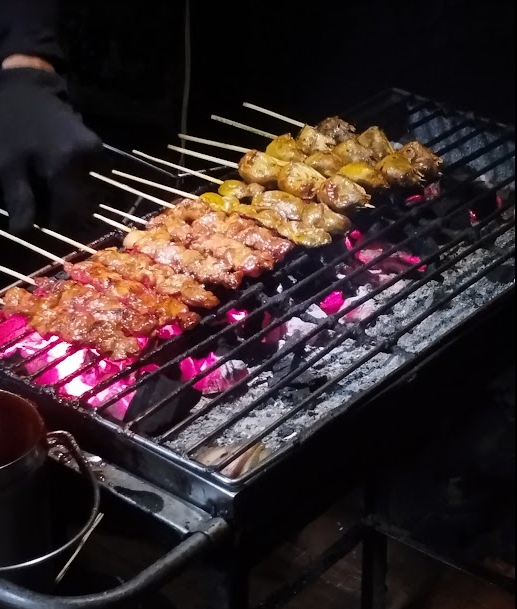
Isaw is the anchor of the Filipino street food experience. Chicken or pork intestines are cleaned, coiled onto bamboo skewers, marinated in soy sauce, calamansi, garlic, and pepper, then grilled over charcoal until charred outside and tender inside. Served with spiced vinegar that cuts cleanly through the fat.
Isaw is not exotic to Filipinos. It is the after-school snack, the post-work bite, the thing people eat while waiting for the jeepney. Try it early in your trip. It sets the right tone for everything that follows.
Hard-boiled quail eggs in a thick orange batter, deep-fried until crispy. Three to a skewer, with sweet, sour, or spicy dipping sauces. Among the most approachable Filipino street snacks for tourists, requiring zero courage and producing reliable satisfaction. The larger hen’s egg version is called tokneneng. If you cannot decide what to try first, start here.
Filipino pork BBQ is marinated in soy sauce, banana ketchup, calamansi, garlic, and brown sugar, then grilled slowly and basted until the surface caramelises dark and glossy. Sweet at the edges, smoky throughout, tender in the middle. It translates instantly for any palate, which is why the stalls selling it always have a crowd. If you smell something good and cannot find the source, it is almost certainly this.
Balut is a fertilised duck egg incubated for around 17 to 18 days and boiled. Inside is a partially developed embryo alongside the broth and yolk, eaten warm with salt or chili-garlic vinegar. Its popularity as a late-night street food is tied to its protein content, its reputation as an energiser for night shift workers, and its alleged aphrodisiac properties, all part of its enduring cultural story.
According to research published in the Journal of Ethnic Foods via Springer Nature, balut has been a cornerstone of Filipino street food culture for generations. Filipinos know it is confronting for outsiders and find the reaction entertaining. The flavour is rich and deeply savoury. The texture is where the open mind is required. If you are only going to try one thing outside your comfort zone, this is the one with the most cultural weight behind it.
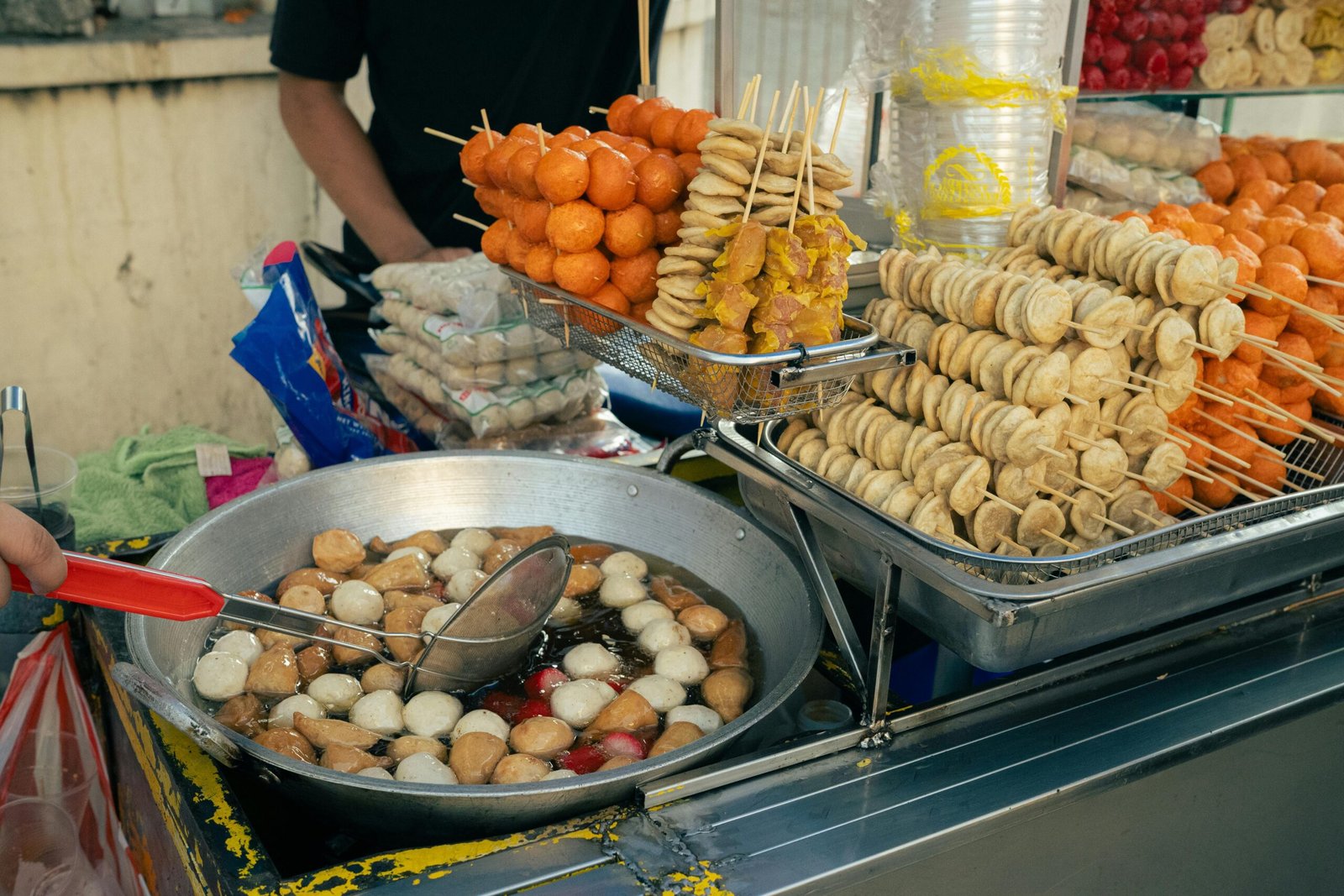
Fish balls are as close to a national street snack as the Philippines has. Flour-based balls made with flaked fish, deep-fried and skewered, dunked in a sauce of your choice. Squid balls follow the same format with a chewier texture and stronger seafood flavour. Choosing your sauce and dunking your own skewer is half the experience. They are the best budget street food option in the Philippines and the snack most Filipinos associate with childhood.
Banana cue takes the saba banana, a starchy local variety, coats it in brown sugar, and deep-fries it on a skewer until the sugar caramelises into a crackly shell. Kamote cue does the same with sweet potato. Both are sold without ceremony at sari-sari stores and market stalls. Filling, sweet, and requiring zero courage. The mid-afternoon batch, freshly fried and still warm, is the one worth finding.
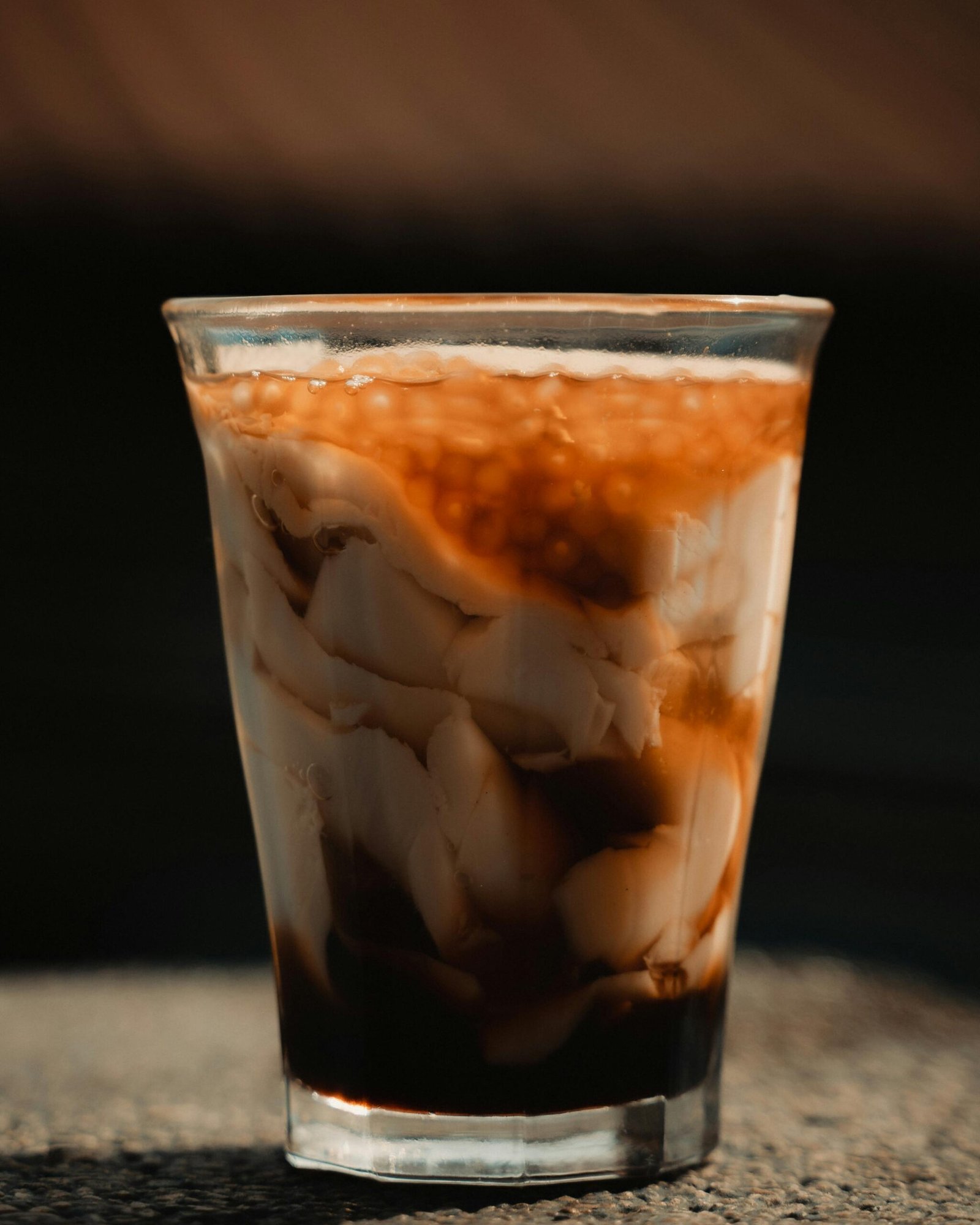
Taho is warm, silky soft tofu served in a cup with arnibal (brown sugar syrup) and sago (tapioca pearls), sold by vendors who carry two aluminium buckets on a shoulder pole through neighbourhoods at dawn, calling out “Tahoooo!” It costs almost nothing and is one of the most comforting things you can eat in the country. Strictly a morning food. Miss the window, and you miss it for the day.
Baguio City has its own version made with strawberry syrup. Worth seeking out if you are in the Cordillera. See our Baguio City travel diary for what else to find there.
The name is a long-running joke referencing the three toes of a chicken foot and the three stripes of the sportswear brand. Adidas is grilled chicken feet, marinated, skewered, and char-grilled until chewy and smoky. A staple of the late-night cart and a common bar chow item alongside cold beer. Almost entirely cartilage and skin, so it is more about flavour than substance. Genuinely good once you stop thinking about what they are.
Turon is saba banana with jackfruit, wrapped in a spring roll wrapper, coated in brown sugar, and deep-fried until crispy with a caramel crust. Sweet, warm, crunchy, and loved by everyone. Unlike most things on this list, it asks nothing of you except your appetite.
Sorbetes is Filipino street ice cream, sold from colourful push carts ringing a bell. Made from coconut milk rather than dairy, giving it a lighter flavour and texture. Comes in ube, mango, cheese, and buko flavours, served in a cone or, in the Visayas, between two halves of a small bread roll. The bread roll version, popular in Cebu, is worth trying for the texture combination alone. See our Cebu City travel diary for more.
A vendor. A green coconut. A machete. A straw. Fresh buko is sold at beaches, markets, and ferry terminals across every island. Drink the coconut water, hand back the shell, have the flesh scooped out. Perfectly hydrating in a tropical climate, costs almost nothing, requires no cultural knowledge. Just a coconut, freshly opened.
Choose busy stalls. A queue of locals beats an empty cart every time, especially in hot weather.
Vinegar is your best companion. Every savoury street food comes with spiced vinegar. Use it. Understanding this is one of the Filipino food customs worth knowing before you arrive.
Bring small bills. Most items cost ₱10 to ₱50. Vendors rarely carry change for large notes. See our Philippines currency exchange guide and our guide on cash vs cards in the Philippines for context.
Eat where locals eat. The best street food is not in tourist zones. Look outside wet markets, near jeepney terminals, and along residential side streets. Following the lunch crowd beats following the tourist map every time.
Pace yourself. Start with two or three items and work through the list across multiple days.
Manila has the densest concentration of vendors, particularly around Quiapo, Divisoria, and Binondo (Manila’s Chinatown). See our Manila travel diary for navigating the city’s food scene.
Cebu City is the place for pork-forward street food, with excellent lechon and grilled meats clustered around the Carbon Market. Iloilo City is one of the more underrated street food cities in the Visayas. Leyte and Eastern Visayas have strong regional traditions worth exploring if you are passing through. See our Leyte travel diary for details.
Outside the cities, street food clusters around ferry terminals, wet markets, and town plazas across every island in the archipelago.
Is Filipino street food safe for tourists?
Yes, with basic common sense. Prioritise stalls where food is cooked fresh to order. High turnover and a local crowd are good signs.
How much does Filipino street food cost?
Between ₱10 and ₱50 per item. A session across four or five dishes rarely exceeds ₱150.
What is the most popular Filipino street food?
Isaw, pork BBQ, fish balls, and kwek-kwek are the everyday staples. Balut is the most internationally famous.
What time do stalls open?
Mid-afternoon until midnight for most stalls. Taho vendors operate strictly in the early morning, around 6 a.m. to 9 a.m.
Are there vegetarian options?
Yes. Banana cue, kamote cue, turon, taho, kwek-kwek, fresh buko, and grilled corn are all vegetarian-friendly. See our guide to vegetarian and vegan travel in the Philippines for more.


Philippines Travel Guide seeks to share the vibe of an authentic experience through our idea of adventure travel for explorers and memory seekers in the Philippines.