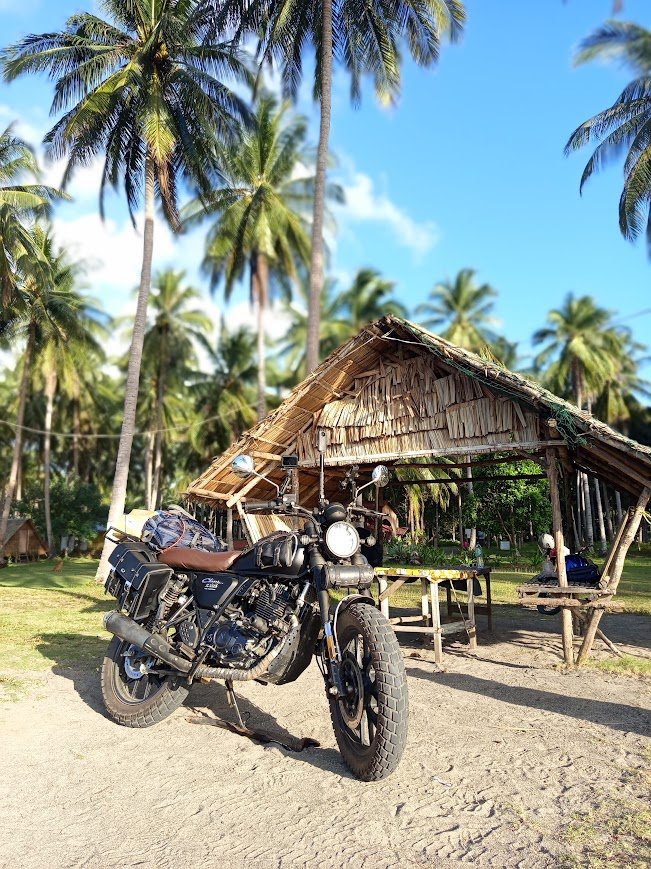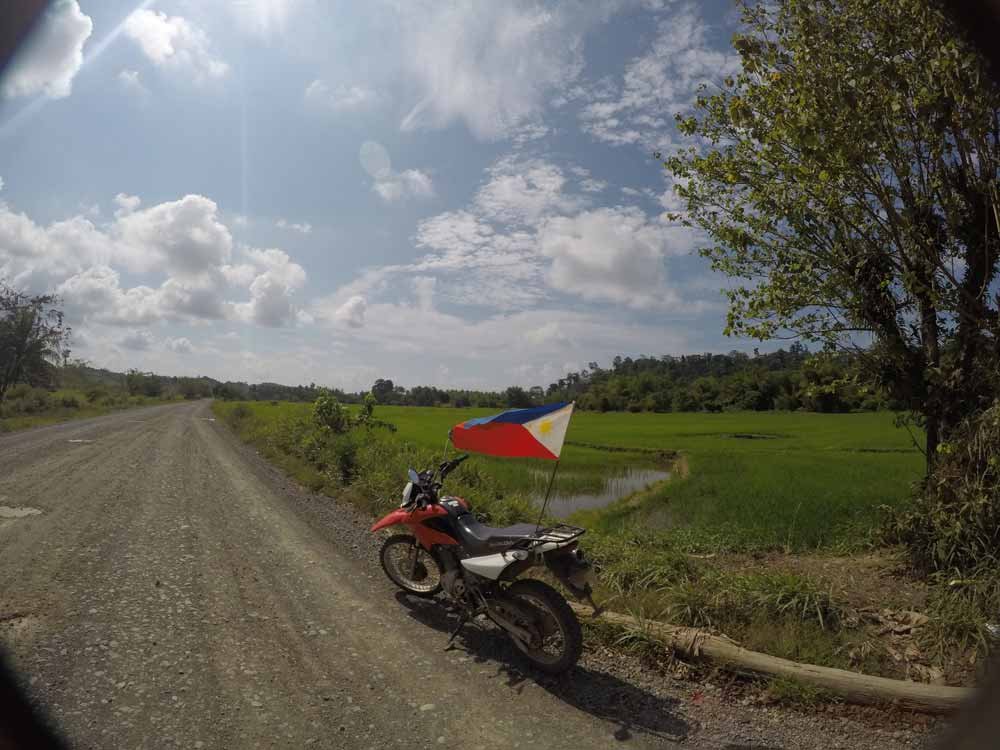
Nobody tells you about the dog that sprints out of a barangay gate at 7 a.m. or the jeepney that overtakes on a blind corner as if physics is optional. Or the moment you crest a mountain road in the Cordillera and see the entire valley open up below you, and you think, this is exactly why I came.
Riding a motorbike across the Philippines is one of the most rewarding ways to travel the archipelago, and one that requires honesty with yourself before you start. The roads are unpredictable, the traffic has its own logic, the weather changes without warning, and the distances between fuel stops in remote areas can be longer than any map suggests. Get those things right, and the experience is difficult to match. Underestimate them, and the trip gets difficult in ways that are hard to fix from the side of a mountain road.
This is what it is actually like, not the highlight reel.
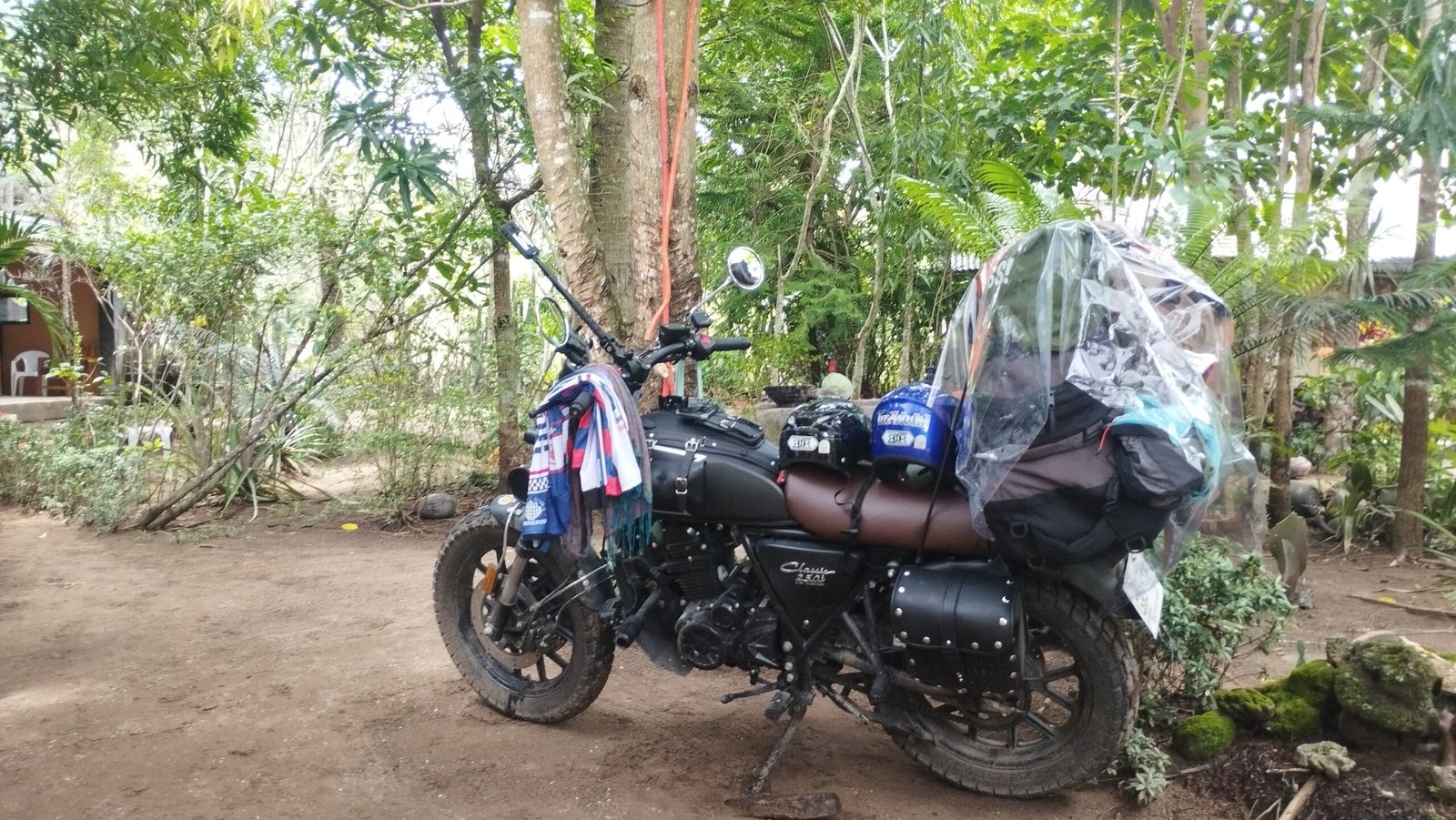
Philippine roads exist on a spectrum that no single description can cover. In one afternoon, you can ride a smooth national highway, turn onto a provincial road that has not been resurfaced since the nineties, and then drop onto a barangay track that is essentially compacted earth with ambitions.
National highways on the major islands are generally rideable and reasonably maintained, though potholes appear without warning and lane markings are treated as suggestions. Provincial roads vary enormously, with some sections crumbling to the point where you are essentially riding gravel. Mountain roads in the Cordillera or Mindanao’s interior have switchbacks, steep gradients, and surfaces that become treacherous the moment it rains, because most roads in the Philippines are paved with cement, which gets dangerously slippery when wet. A road that felt solid at 9 am can change character entirely by the time the afternoon downpour arrives.
What you will encounter regardless of route: speed bumps placed without warning, often unpainted on older roads. Children, chickens, and dogs on the road. Tricycles pulling out from side streets. Jeepneys are stopping anywhere. Farm vehicles moving at 15kph. None of these is unusual. They are just the conditions.
Metro Manila is in a category of its own and is not the right place to start a motorbike trip if you are unfamiliar with Philippine roads. The city recorded more than 26,000 motorcycle accidents in 2022, with numbers remaining high. It rewards experienced riders who can read chaotic traffic. It punishes hesitation.
Outside Manila, traffic thins and the rhythm becomes manageable. Provincial driving has its own unwritten rules: overtake confidently, stay aware of oncoming traffic, and never assume the other vehicle will give way. Filipinos on motorbikes are generally skilled, experienced riders, and watching how locals handle a particular stretch of road tells you a great deal about what it actually demands.
Legal speed limits set 80kph on open country roads without curves, 40kph on through streets, and 30kph in light traffic conditions. In practice, provincial riding settles naturally around 50 to 60kph, fast enough to cover ground and slow enough to react to whatever appears.
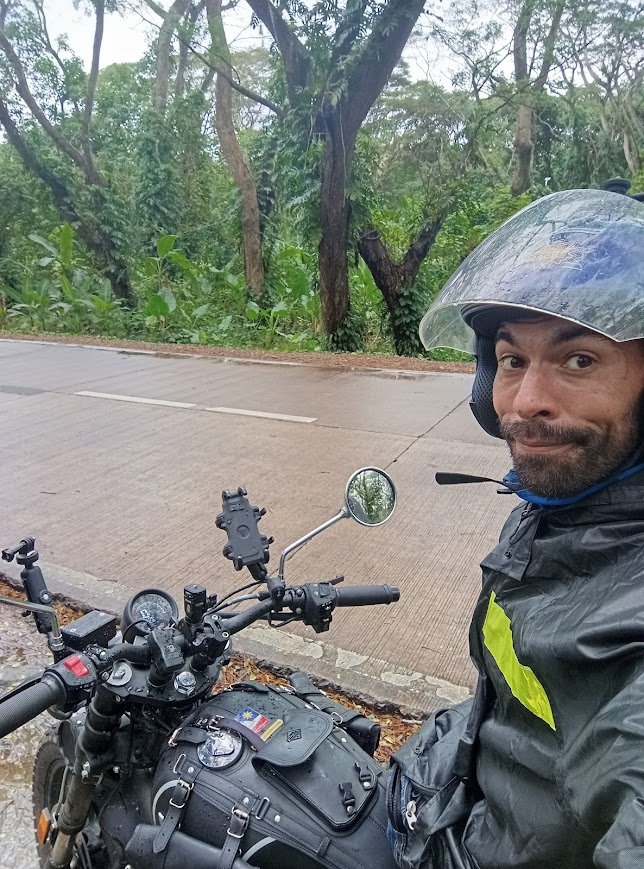
The dry season from November to April is the most reliable window for motorbike travel, with cooler temperatures and mostly clear roads. The wet season from May to October brings heavy afternoon rain, reduced visibility, and surfaces that change character rapidly on mountain routes.
The Philippines does not have a single climate, which complicates planning. The east coast of Luzon and the Eastern Visayas run an inverted season, wet when the west is dry. Mindanao’s interior is relatively dry year-round. Typhoons, which require more planning than most first-time visitors expect, can arrive between June and November with little warning and make entire routes impassable.
The practical reality on a motorbike is that you will get rained on regardless of the season. A waterproof jacket and dry bags are not optional extras. The afternoon rain in the tropics is not a drizzle. It is a downpour that reduces visibility to a few metres and soaks through regular clothing in under a minute.
For long-distance motorbike travel across the Philippines, a 125cc to 250cc semi-automatic or manual bike is the sensible choice. A 250cc handles mountain gradients, fits on narrow roads, is easy to maintain, and can be rented or repaired almost anywhere. It strikes the right balance between power and fuel efficiency for the variety of terrain you will encounter.
Scooters work fine for flat coastal island routes and short daily distances, but they struggle on sustained mountain climbs and feel unstable on rougher roads at speed. Big bikes above 400cc are impressive on highways but attract unwanted attention, cost more to rent, and are genuinely difficult to service outside major cities.
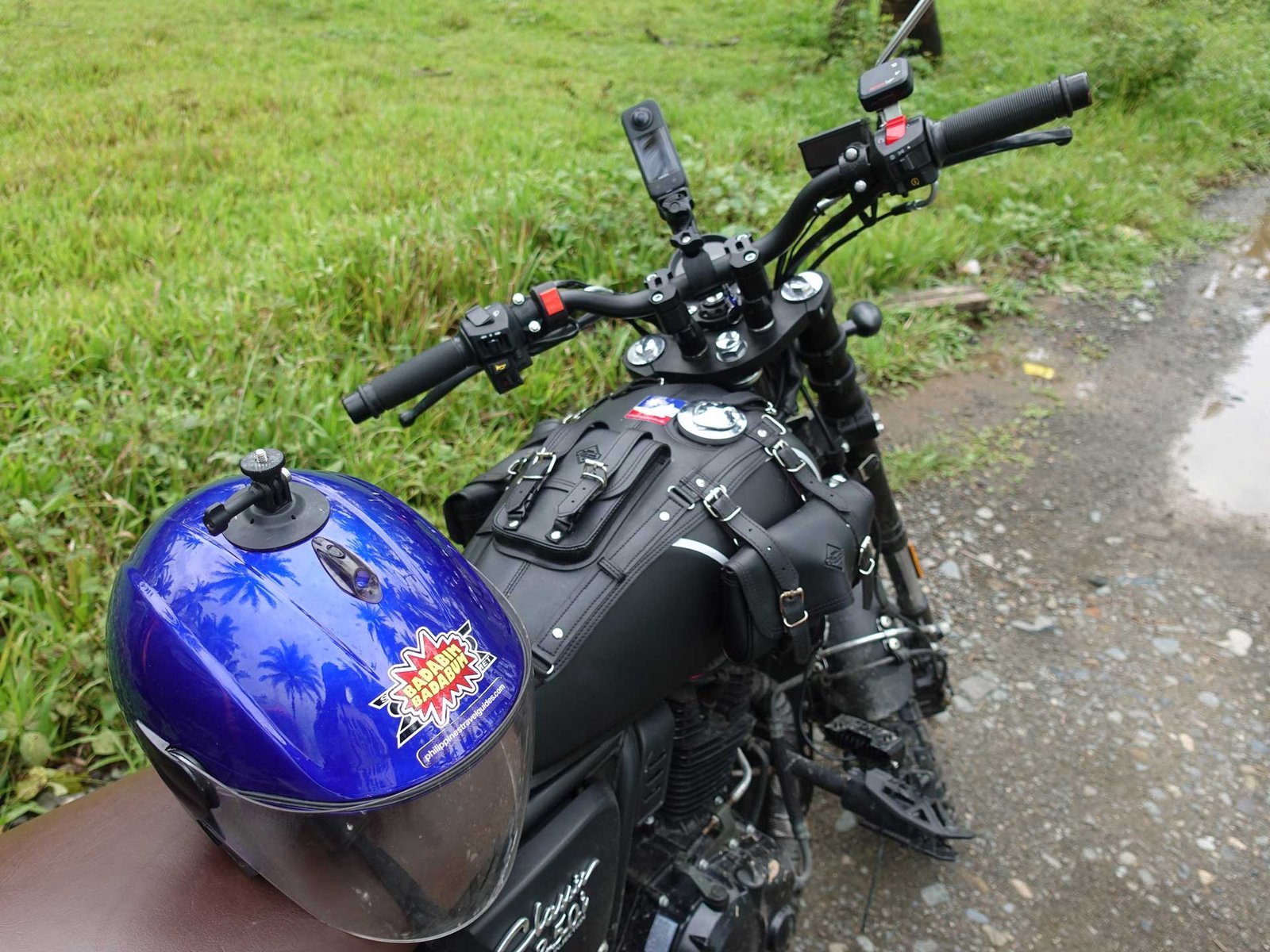
Whatever you ride, the pre-departure checks that matter most are tyre condition, brake response, fuel level, chain tension, lights, and horn. A non-functioning horn in the Philippines is a genuine liability, not a minor inconvenience.
Starting from Baguio City and riding north through Sagada, Bontoc, Kalinga, and back through the Banaue Rice Terraces is one of the finest motorbike routes in Southeast Asia. Mountain roads, rice terrace views, indigenous communities, and dramatic elevation changes across every riding day. The descent into Kalinga is the most technically demanding section, but nothing on this loop is beyond a competent intermediate rider.
The interior road connecting El Nido and Puerto Princesa passes through the jungle, crosses rivers, and reaches beaches that have not yet been developed. Road quality varies significantly, with rough provincial sections between smoother national highway stretches. The full motorbike adventure across this route gives a realistic picture of what to expect, and renting the right bike in Palawan makes a meaningful difference on the rougher sections.
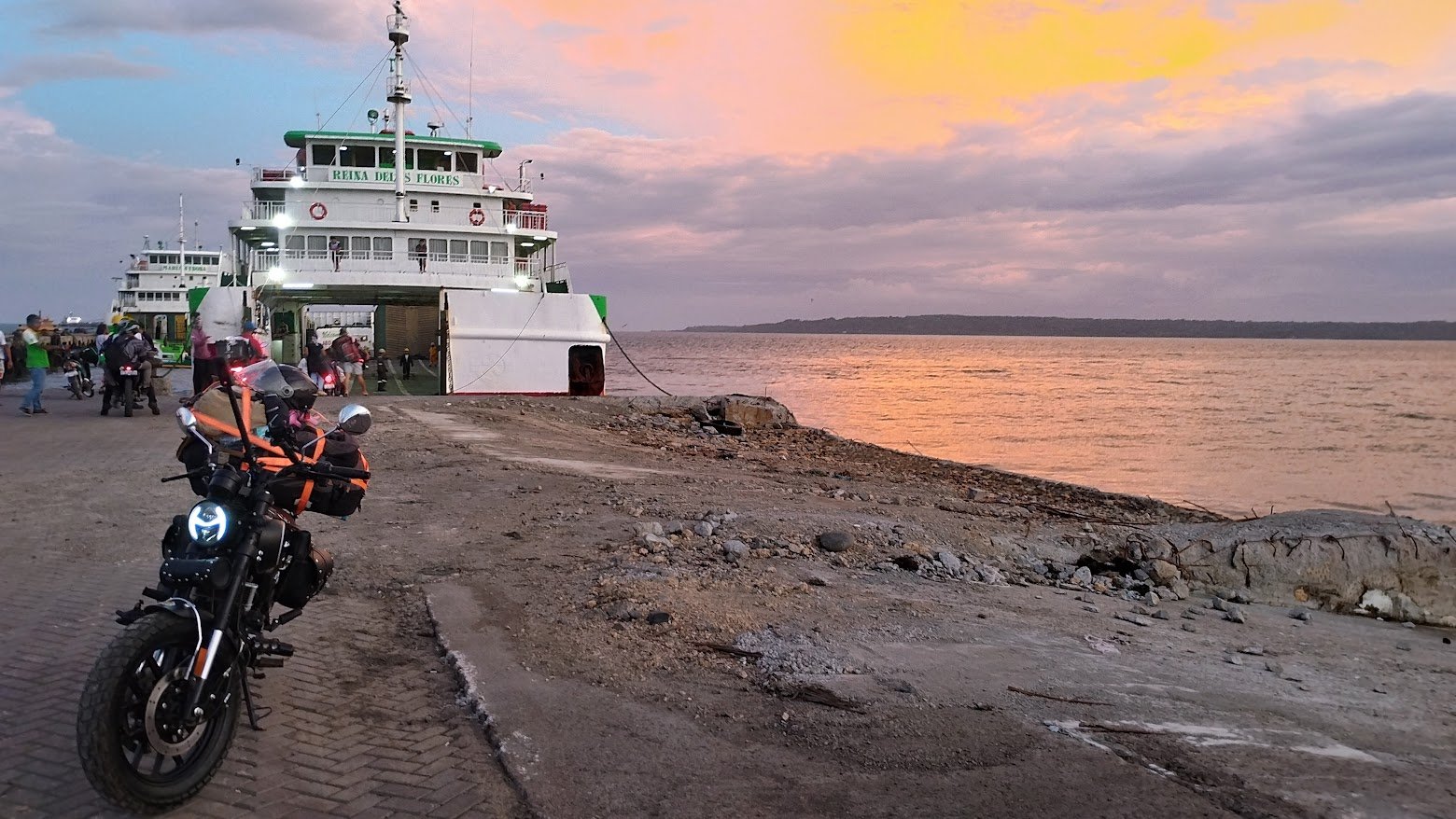
Combining Cebu, Negros, and Siquijor into a single loop is achievable because RoRo ferries between the central islands carry bikes for minimal cost and run on reliable schedules. Cebu’s south has coastal roads with the sea below and mountains above. Negros has the Kanlaon highway cutting through the interior. Siquijor’s loop road covers almost everything worth seeing in a couple of relaxed hours. It is one of the most satisfying circuits in the Visayas and entirely manageable on a standard rental bike.
On major national highways, petrol stations appear often enough that range is not an issue. On mountain routes and remote island roads, the gap between stations can exceed your tank’s range. Fill up whenever you have the opportunity, not when you need to.
Unlit roads, unlit vehicles, and animals on the road after dark make night riding genuinely hazardous outside well-lit urban areas. Build your daily distances around arriving before sunset. This is not overcaution. It is how experienced riders in the Philippines approach it.
A valid motorbike licence from your home country plus an International Driving Permit (IDP) is the standard requirement for foreign riders. Rental shops will ask for a passport copy and a deposit. How the process works in practice for foreign riders varies slightly by island and operator, but the IDP requirement is consistent.
Fuel, food, ferry crossings, and accommodation on rural routes are almost entirely cash-based. ATMs outside major towns can be unreliable or empty. Whether you can get by on cards alone in the Philippines is a question worth answering before you head off the main roads, not after.
Standard rental agreements carry minimal coverage. For any serious long-distance riding, travel insurance that explicitly covers motorbike accidents is the non-negotiable item most people skip and regret.
None of the above is meant to discourage. It is meant to prepare you, because the trip that earns the best stories is the one you went into with clear eyes.
When it works, and it usually does, riding a motorbike across the Philippines gives you access to the country in a way that no bus window or island-hopping tour can. You stop when you want, at the waterfall spotted from the road, the beach with no signage, the market town that appears in no guide. You eat where the locals eat because you are moving through the place rather than being transported between the highlights.
The Cordillera at dawn. The Palawan coast at late afternoon. The smell of rice cooking from an open kitchen as you slow down through a provincial town. These things do not happen on a tour itinerary. They happen when you are moving at your own pace, on your own wheels, through one of the most beautiful countries on earth.
Solo riders heading to remote areas face a different set of considerations around communication and emergency planning than those travelling in pairs or groups. It is worth deciding which approach suits your experience level and risk tolerance before you commit to a route.
Do I need a licence to ride a motorbike in the Philippines?
Yes. A valid motorbike licence from your home country plus an International Driving Permit (IDP) is required for foreign riders. Rental shops will ask to see both alongside your passport.
What is the best motorbike size for riding across the Philippines?
A 250cc bike strikes the best balance of power, fuel efficiency, and repairability for long-distance riding. Scooters work on flat island roads but struggle on mountain routes.
Is it safe to ride a motorbike in the Philippines?
Manageable with proper preparation, the right gear, and realistic expectations about road conditions. Insurance, a good helmet, and avoiding night riding reduce the real risks considerably.
Can I take my motorbike on a ferry between islands?
Yes. RoRo (Roll-on Roll-off) ferries carry bikes between most major island routes at low cost and on reliable schedules.
What is the best time of year for motorbike travel in the Philippines?
November to April. The dry season gives the most reliable road conditions across most of the country. The Cordillera and Palawan are particularly well-suited to this window.


Philippines Travel Guide seeks to share the vibe of an authentic experience through our idea of adventure travel for explorers and memory seekers in the Philippines.