If there is one island in the Philippines where food is taken almost as seriously as the beaches, it is Cebu. Known as the Queen City of the South, Cebu is not just a gateway to world-class diving reefs and white-sand islands. It is an unmissable culinary destination that has earned its place on the global food map. In 2025, the Michelin Guide officially arrived in the Philippines, with Cebu receiving its own selection of recognized restaurants for 2026, a milestone that cemented what locals have always known: the food here is extraordinary.
Whether you are island-hopping from El Nido, on a stopover from Bantayan Island, or spending a full week exploring Cebu City and South Cebu, you owe it to yourself to eat deeply and eat well. This guide covers the best Cebu food you have to try before you leave, from iconic dishes rooted in centuries of Visayan tradition to the street food snacks you will find yourself thinking about long after you fly home.
Pro tip: Before you arrive, make sure you have sorted your Philippines SIM card and checked the latest Philippines currency exchange guide. You will want cash handy for the best street food spots.
Cebu is most famous for its lechon (whole roasted pig), considered the best in the Philippines. Beyond lechon, Cebu’s food identity is shaped by fresh seafood prepared sutukil-style (grilled, stewed, and raw-marinated), the Chinese-Visayan snack ngohiong, tangy kinilaw (Filipino ceviche), chewy puso (hanging rice), and sweet Cebuano mangoes, widely regarded as the finest in the Philippines. In 2026, Cebu will also hold its first Michelin Guide-recognized restaurants, making it one of Southeast Asia’s most exciting food cities.
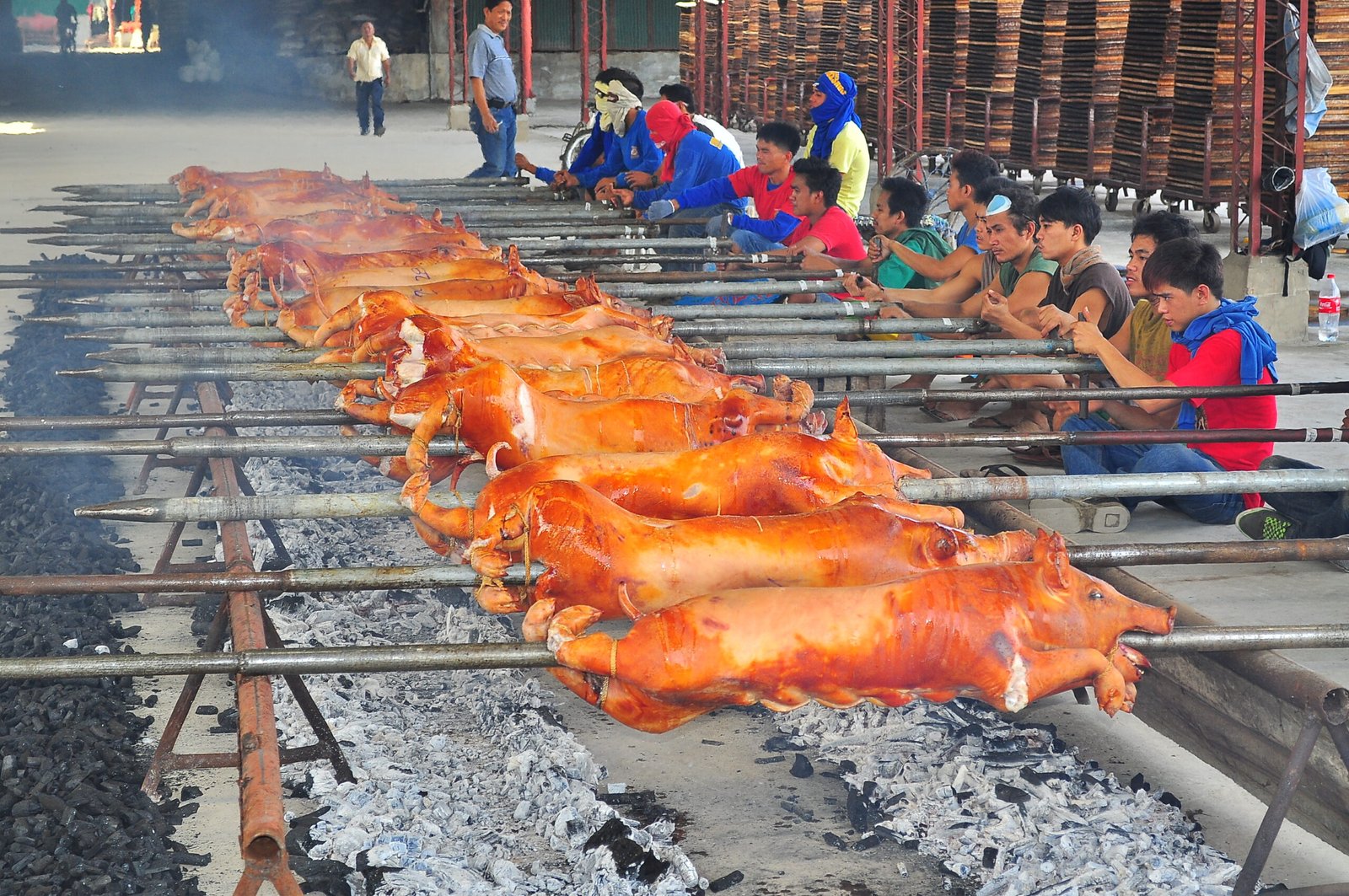
No discussion of Cebu food begins anywhere other than lechon. The whole-roasted pig is the centerpiece of every major Filipino celebration, but Cebuano lechon is in a class of its own. What makes it different? The pig is stuffed with lemongrass, garlic, spring onions, and aromatic local herbs before being slow-roasted over charcoal for several hours. The result is crackling-crisp skin so thin it shatters on contact, and meat so deeply seasoned it needs no dipping sauce. This is unlike the Manila version, which traditionally comes with liver sauce.
The rivalry between Rico’s Lechon and Zubuchon is legendary. Rico’s is known for its spicy variant coated in chilli and chives, while Zubuchon, championed by celebrity chef Anthony Bourdain as the best pig ever, takes a more classically aromatic route. Both are superb. Both sell out. Arrive before 11 AM for the crispiest skin.
Where to Try: Rico’s Lechon (multiple branches), Zubuchon (multiple branches), Sutukil spots at Larsian BBQ Market
Price Range: PHP 300 to PHP 500 per kilo (takeaway); PHP 200 to PHP 300 for a full platter in a sit-down eatery
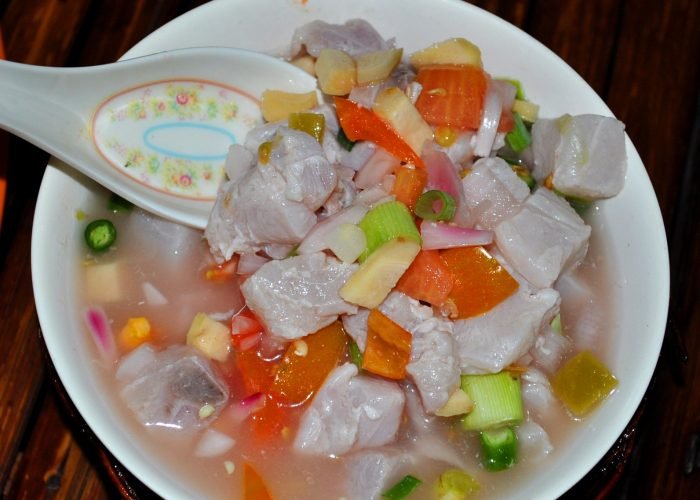
If lechon is Cebu’s king, sutukil is its crown jewel for seafood lovers. The word is an acronym combining three Cebuano cooking methods: sugba (grilled), tuwa (stewed in broth), and kilaw (raw-marinated in vinegar and citrus). At a sutukil restaurant, you pick your fresh catch from a display of the day’s seafood, choose your preferred cooking method (or order all three), and eat with rice or puso.
The Mactan Seafood Market and Lantaw Floating Native Restaurant (also a Michelin Bib Gourmand 2026 awardee) are iconic spots. At Lantaw, you eat on a floating platform over the water, feasting on grilled tuna belly, kinilaw, and crispy fried squid while the sun sets behind Mactan Bridge. Few dining experiences in Southeast Asia rival it.
Where to Try: Lantaw Floating Native Restaurant (Cordova), Larsian BBQ Market (Fuente Osmena), STK Ta Bai (multiple branches)
Price Range: PHP 150 to PHP 600 per dish, depending on seafood and cooking method
One of Cebu’s most distinctive street snacks, ngohiong (also spelled ngo-hiong) is a deep-fried roll made from ground pork or shrimp mixed with Chinese five-spice powder, singkamas (jicama), and spring onions, wrapped in a thin tofu skin or flour wrapper before frying. The result is a crispy shell with a savory, mildly anise-flavored filling that is wildly addictive.
This snack is a direct product of Cebu’s centuries-long Chinese trading heritage. The Hokkien Chinese community that settled in Cebu brought the five-spice technique, which fused seamlessly with local Visayan ingredients. Today, ngohiong is sold at markets, street corners, and dedicated stalls along Colon Street, the oldest street in the Philippines, for PHP 20 to PHP 40 per piece.
Where to Try: Colon Street vendors, Taboan Public Market, Larsian BBQ, Home of Sutukil
Price Range: PHP 20 to PHP 40 per piece
Ask for a plate of lechon or grilled barbecue in Cebu without rice, and the vendor might laugh. But the rice you want is not on a plate; it is hanging from a hook. Puso, literally meaning “heart” in Cebuano, is rice cooked and packed inside a woven diamond-shaped coconut leaf. The weaving compresses the rice into a firm, slightly chewy block that is easy to hold, eat on the go, and pair with any dish.
The diamond shape and the weaving technique are uniquely Cebuano, and the skill required to weave puso quickly is an art passed down through generations. You will see puso hanging in bunches at every barbecue stall, market, and street food corner across the city. It costs PHP 5 to PHP 10 per piece and is the single most affordable and authentic Cebu food experience you can have.
Where to Try: Any street barbecue stall, Larsian BBQ Market, Carbon Market, roadside vendors throughout Cebu
Price Range: PHP 5 to PHP 10 per piece
If you want to eat like a true Cebuano local, seek out linarang, also called larang or nilarang. This is a hot and sour fish stew deeply rooted in Central Visayas tradition. The broth is built on fermented black beans (tausi), coconut milk, aromatics, and a souring agent, usually kamias or green mango, that gives it a gentle, structured acidity. Common proteins include porcupine fish, eel, or other local reef species, and it is traditionally served with mais (corn grits) rather than rice, a distinctly Cebuano touch.
Esmen in Pasil, a humble family-run eatery and Michelin Guide 2026 awardee, is widely considered the definitive address for linarang. It is the kind of restaurant that would be invisible to tourists without insider knowledge, which is exactly the point. The Michelin Guide’s recognition of Cebu in 2026 has put spots like Esmen on the international food map for the first time.
Where to Try: Esmen (Pasil, Cebu City), Ato-ah Restaurant, local eateries (carinderias) in the Pasil Fish Market area
Price Range: PHP 150 to PHP 300 per serving
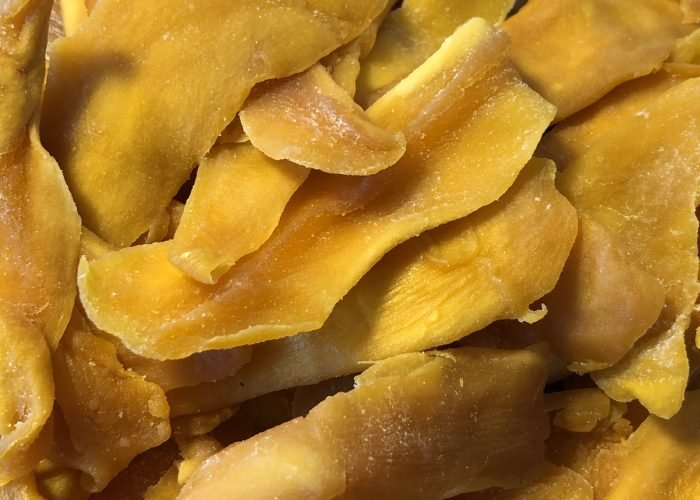
The Philippine mango (Mangifera indica var. carabao) is widely considered the sweetest mango in the world, and Cebu is home to some of the finest. But beyond the fresh fruit, which is extraordinarily eaten with salt and bagoong shrimp paste, Cebu is globally famous for its dried mangoes. Sweet, chewy, and intensely flavored, Cebu dried mangoes are the go-to pasalubong (gift or souvenir) that every traveler carries home.
The leading brands are Dried Mango Depot, Mooon Cafe’s mango desserts, and Mango Republic in the Ayala Center. Beyond dried mangoes, try mango float (a chilled dessert layered with fresh mango, cream, and graham crackers), mango tarts from Calea Pastries and Cakes, and fresh mango shakes from almost any cafe or juice stall in the city.
Where to Try: Taboan Public Market (best prices for dried mangoes), Ayala Center Cebu food stalls, Calea Pastries and Cakes, any SM mall food court
Price Range: PHP 80 to PHP 200 for dried mango packs; PHP 80 to PHP 150 for fresh mango shakes
Cebu’s noodle tradition is less talked about internationally, but locals are passionate about it. Batchoy, a rich pork and noodle soup originally from Iloilo, has been enthusiastically adopted in Cebu, and some of the city’s pares houses serve a unique fusion that combines batchoy broth with lechon pares (braised pork slices). The result is a deeply satisfying bowl of thin egg noodles swimming in a savory, slightly sweet soy-and-bone broth, topped with crispy lechon bits and garlic rice on the side.
Pares Pares on C. Rodriguez Street, a 2026 Michelin Bib Gourmand awardee, is the standard-bearer. Their beef pares with bone marrow is an event in a bowl: soft braised beef, gelatinous marrow you spoon directly from the bone, and garlic rice that soaks up every drop of the broth. Budget PHP 150 to PHP 250 for a full meal, and eat at lunch when the kitchen is at peak form.
Where to Try: Pares Pares (C. Rodriguez St, Cebu City), local pares stalls in Carcar City
Price Range: PHP 120 to PHP 300 per meal
While lechon (roasted whole pig) gets the headlines, lechon manok (roasted chicken) and chicken inasal are the everyday comfort foods that keep Cebu running. Cebuano-style chicken inasal differs from the Bacolod original: it is marinated in a mixture of annatto (achuete), calamansi, garlic, lemongrass, and vinegar, then grilled over charcoal and basted continuously with seasoned oil. The fat drips onto the coals, creating fragrant smoke that infuses every bite.
For a complete Cebuano grilled experience, combine chicken inasal with puso, a green mango salad, and the chicken oil rice (sinangag cooked in the chicken’s own drippings). Find this combination at any of Cebu’s bayside grilling areas or at AA BBQ on Salinas Drive, Lahug.
Where to Try: AA BBQ (Lahug), Larsian BBQ Market (Fuente Osmena), mang-inasal stalls throughout the city
Price Range: PHP 80 to PHP 200 per serving
About 30 kilometers south of Cebu City, the historic town of Carcar is the spiritual home of Philippine chicharon (pork crackling). Carcar chicharon is not the airy, expanded puffed skin you find elsewhere. It is dense, thick, and deeply savory, made from slow-dried and double-fried pork rind that shatters with a satisfying crunch. The fat-to-skin ratio gives it a richness that is unmatched, and locals eat it with spiced vinegar or chilli dipping sauces.
No road trip through South Cebu is complete without pulling over in Carcar to buy a bag. The stalls line the main highway, and vendors press samples into your hands before you have even parked. Pair the chicharon with Carcar rosquillos, a delicate shortbread-style biscuit unique to the town, for the ultimate South Cebu pit-stop. If you are planning a scenic drive, check the Philippines travel guide for route tips and transport options.
Where to Try: Carcar City main highway stalls (30 km south of Cebu City), pasalubong shops in Ayala Center and SM City Cebu
Price Range: PHP 80 to PHP 200 per bag
As evening falls across Cebu, the barbecue stalls come alive. Larsian BBQ Market near Fuente Osmena Circle is the epicenter, a sprawling open-air eating area where dozens of stalls grill pork belly, chicken, intestines (isaw), chicken skin, and various internal organs over charcoal. The smoke, the sizzle, and the collective heat create an atmosphere that is as much entertainment as dining.
The protocol is straightforward: pick your skewers from any stall (they are all similarly priced), grab puso from a vendor, choose your dipping sauce (spiced vinegar, chilli-garlic, or sweet sauce), find a table, and eat. Wash it down with a cold San Miguel Beer or a fresh buko (coconut) juice. It is the most democratic, communal, and delicious way to end a day in Cebu. If you want to get off the beaten path, ask a local. Knowing a few basic Filipino phrases goes a long way at these local spots.
Where to Try: Larsian BBQ (Fuente Osmena Circle), Carbon Market area, Pasil Fish Market
Price Range: PHP 15 to PHP 50 per skewer; full meal with puso and drinks, PHP 100 to PHP 200
Cebu’s version of pochero is a slow-simmered pork and banana blossom soup with a slightly sweet, tomato-based broth, different from the more widely known Manila version. Bulalo, the iconic Filipino bone marrow and beef shank soup, also has devoted adherents in Cebu, particularly at restaurants near the upland areas where the cooler weather makes hot soup feel like a necessity.
For a more modern take on Filipino comfort food, the Coco Restaurant, a 2026 Michelin Guide-recognized establishment run by a Korean owner and a young Cebuano kitchen team, merges Filipino and Thai-Korean flavors in dishes like sisig with egg and mango-green onion kimchi. It is exactly the kind of fusion that captures contemporary Cebu: confident, cross-cultural, and deeply satisfying.
Where to Try: Coco Restaurant (Cebu City), AA BBQ (Lahug for pochero), STK Ta Bai (multiple branches)
Price Range: PHP 200 to PHP 500 per serving
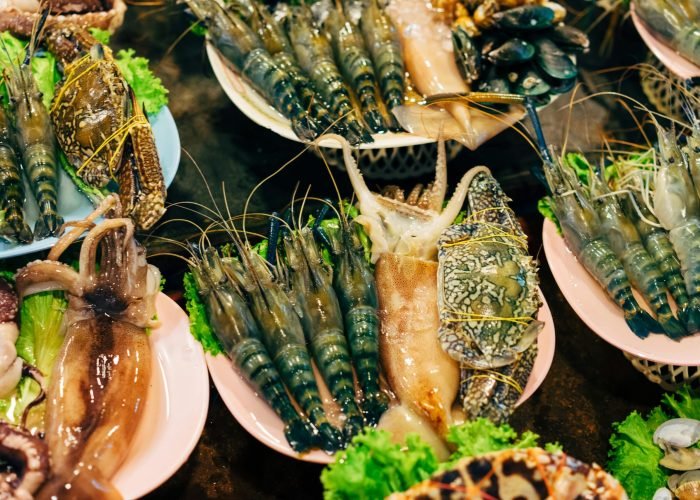
Cebu sits at the intersection of the Visayan Sea, Camotes Sea, and Cebu Strait, meaning the seafood arriving daily at Pasil Fish Market and Taboan Public Market is spectacularly fresh. The local rule is simple: arrive at the market early (before 7 AM for the best selection), point at what you want, negotiate a price, and take it to a cooking stall nearby to have it prepared sutukil-style.
Look out for tuna panga (grilled tuna jaw), baked scallops, crispy whole lapu-lapu (grouper), sizzling squid, and bucket shrimps (boiled or steamed whole with dipping sauces). The I Love Bucket Shrimps restaurant in Mactan Wharf serves enormous shared platters and is perpetually packed with locals celebrating everything from birthdays to any ordinary Tuesday. If you are a vegetarian or have dietary preferences, see the vegetarian travel guide to the Philippines for alternatives.
Where to Try: Pasil Fish Market, Taboan Market, I Love Bucket Shrimps (Mactan Wharf), Lantaw Floating Native Restaurant
Price Range: PHP 300 to PHP 1,500 for a shared seafood platter
The 2026 Michelin Guide Philippines includes the following Cebu establishments:
This recognition reflects Cebu’s evolution as a serious culinary destination, not just a beach stop.
Taboan Public Market is the best place to buy dried mangoes, salted fish (danggit and pusit), and Cebuano pasalubong. Go early, bargain hard, and bring a reusable bag.
The Carbon Market is the largest and oldest market in Cebu. Overwhelming but brilliant for fresh produce, street snacks, and an unfiltered slice of everyday Cebu life.
Larsian BBQ Market is open from early evening until midnight. The best outdoor barbecue experience in Cebu City, with dozens of competing stalls, communal tables, and puso vendors.
Pasil Fish Market is best visited at dawn for the freshest morning catch straight off the boats. Bring a cooler if you plan to take fish back to your accommodation.
Eat lunch, not dinner, for lechon. Most lechon stalls roast overnight and sell out by 2 PM. The skin is crispiest before noon.
Cash is king at markets. Taboan, Carbon, and most street food stalls are cash-only. Check the Philippines currency exchange guide and carry PHP 500 to PHP 1,000 for a full market day.
Get to Pasil Fish Market early. The best selection is between 5 and 8 AM. After 9 AM, the premium catch is gone.
Learn a few local words. Try the word “suwerte” (lucky) while bargaining at markets. Cebuanos appreciate the effort. More useful Filipino phrases here.
Use Google Maps and Grab. Most Michelin-recognized restaurants accept reservations via Facebook Messenger or phone. Grab (the Southeast Asian Uber) is the easiest way to get between food stops. Make sure you have a working Philippines SIM card for data.
Book Lantaw in advance. This floating restaurant fills up quickly, especially on weekends. Call or message via Facebook at least a day ahead.
Consider a food tour. Several operators run 3 to 4-hour guided Cebu food tours covering Pasil Market, Colon Street, and Larsian BBQ for approximately PHP 800 to PHP 1,500 per person, including tasting portions.
The beauty of Cebu is that its best food is never more than a short ride from extraordinary nature. After morning lechon and kinilaw, you can be snorkelling with whale sharks in Oslob by afternoon, or driving south past Carcar for chicharon before stopping at Moalboal’s Panagsama Beach for dinner. Explore all of Cebu’s adventure options as part of your wider Philippines itinerary.
Cebu also makes an excellent base for island-hopping across the Visayas region. From Cebu, ferries connect to Siquijor Island, Negros Island, and Leyte, each with their own distinct food culture worth exploring. Check the ferry travel guide for the Philippines for routes and schedules.
If Cebu is part of a broader Philippines trip, the most popular Philippines destinations guide will help you plan the perfect island-hopping route.
What is the most famous food in Cebu?
Cebu lechon is the most famous food, a whole-roasted pig perfumed with lemongrass and local herbs, with crackling skin that needs no sauce. It has been called the best pork dish in the world by multiple international food writers.
Is Cebu food spicy?
Traditional Cebuano food is not inherently very spicy. However, many popular dishes, including Rico’s spicy lechon and various kinilaw preparations, offer a chilli kick. Ask before ordering if you are sensitive to heat.
What are the best street foods in Cebu?
The best Cebu street foods include ngohiong (Chinese five-spice rolls), puso (hanging rice), barbecue skewers at Larsian, kinilaw from market stalls, and fresh mango shakes from roadside vendors.
Is Cebu food expensive?
Cebu food ranges from incredibly affordable to fine-dining prices. A full street food meal with barbecue, puso, and a drink costs PHP 100 to PHP 200 (approximately USD 2 to USD 3.50). A sit-down meal at a good restaurant runs PHP 500 to PHP 1,500 per person. Michelin-recognized establishments average PHP 800 to PHP 2,500 per head.
What are good food souvenirs from Cebu?
The top Cebu food souvenirs are dried mangoes (best from Taboan Market), danggit (dried rabbitfish), pusit (dried squid), lechon seasoning mixes, rosquillos biscuits from Carcar, and otap (oval flaky pastry).
Are there vegetarian options in Cebu?
Vegetarian dining in Cebu is possible but requires some planning. Markets offer fresh fruit, grilled corn, and vegetable dishes. Some restaurants have dedicated vegetarian menus. See the complete vegetarian and vegan travel Philippines guide for specific recommendations.
Cebu’s culinary identity is one of the most authentic and compelling in Southeast Asia. It is a cuisine shaped by centuries of trade, from Chinese, Spanish, Malay, to American influences, all filtered through a distinctly Visayan sensibility that prizes freshness, fire, and communal eating. The 2026 Michelin Guide recognition is not a transformation of Cebu’s food scene. It is finally an international acknowledgement of something locals have always known.
Whether you spend an afternoon at Larsian barbecue market or book a table at Lantaw for sunset kinilaw, every meal in Cebu tells a story. Eat the lechon. Order the sutukil. Buy dried mangoes at Taboan. Try the ngohiong on Colon Street. These are not just dishes. They are the living culture of an island that has always fed its people and its visitors with extraordinary generosity.
For more ideas on where to go next, explore the full Philippines Adventure Diary, check the latest Philippines travel tips, and browse the best Philippines destinations to visit in 2026 to plan the perfect trip around Cebu and beyond.


Philippines Travel Guide seeks to share the vibe of an authentic experience through our idea of adventure travel for explorers and memory seekers in the Philippines.