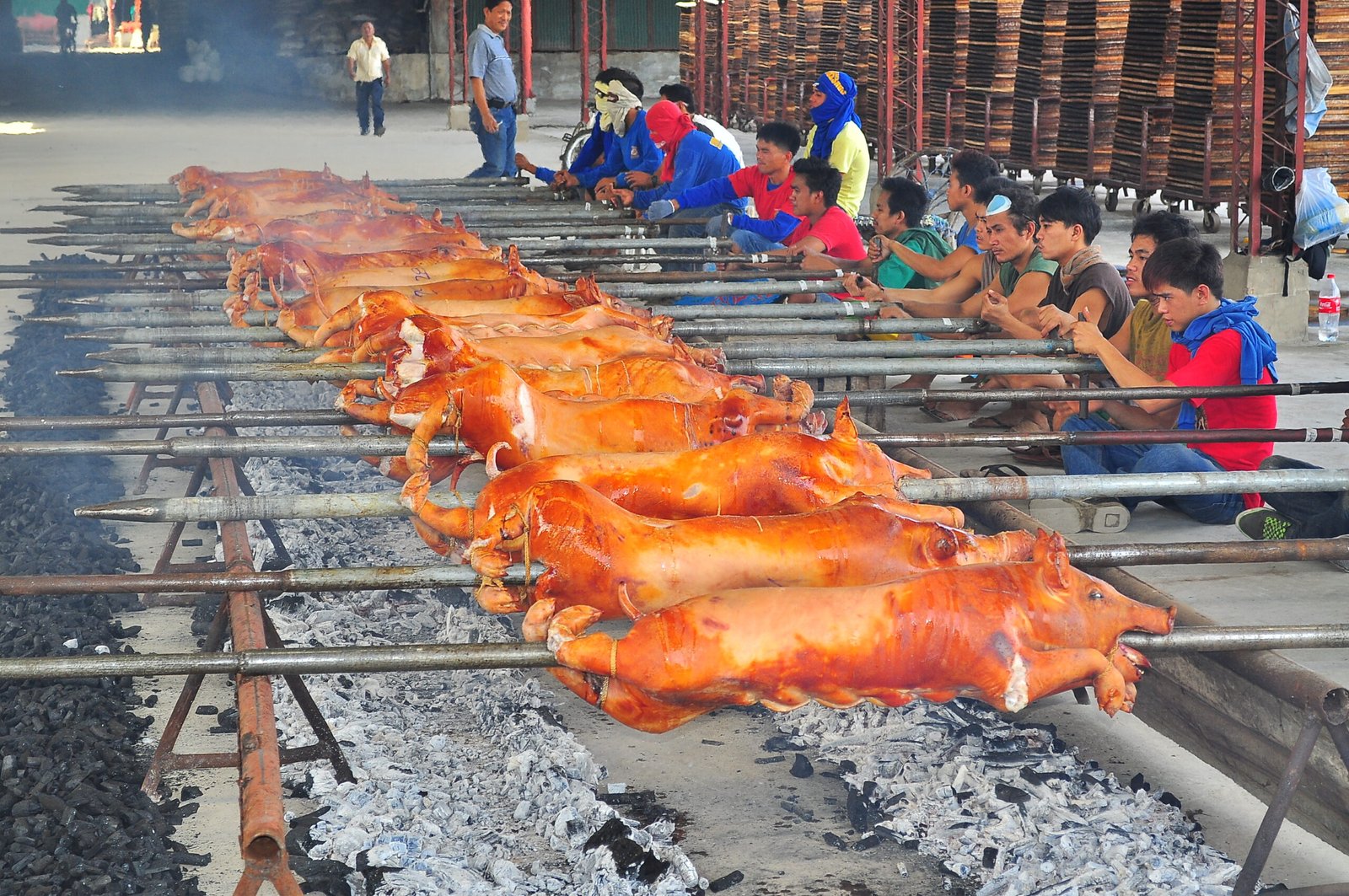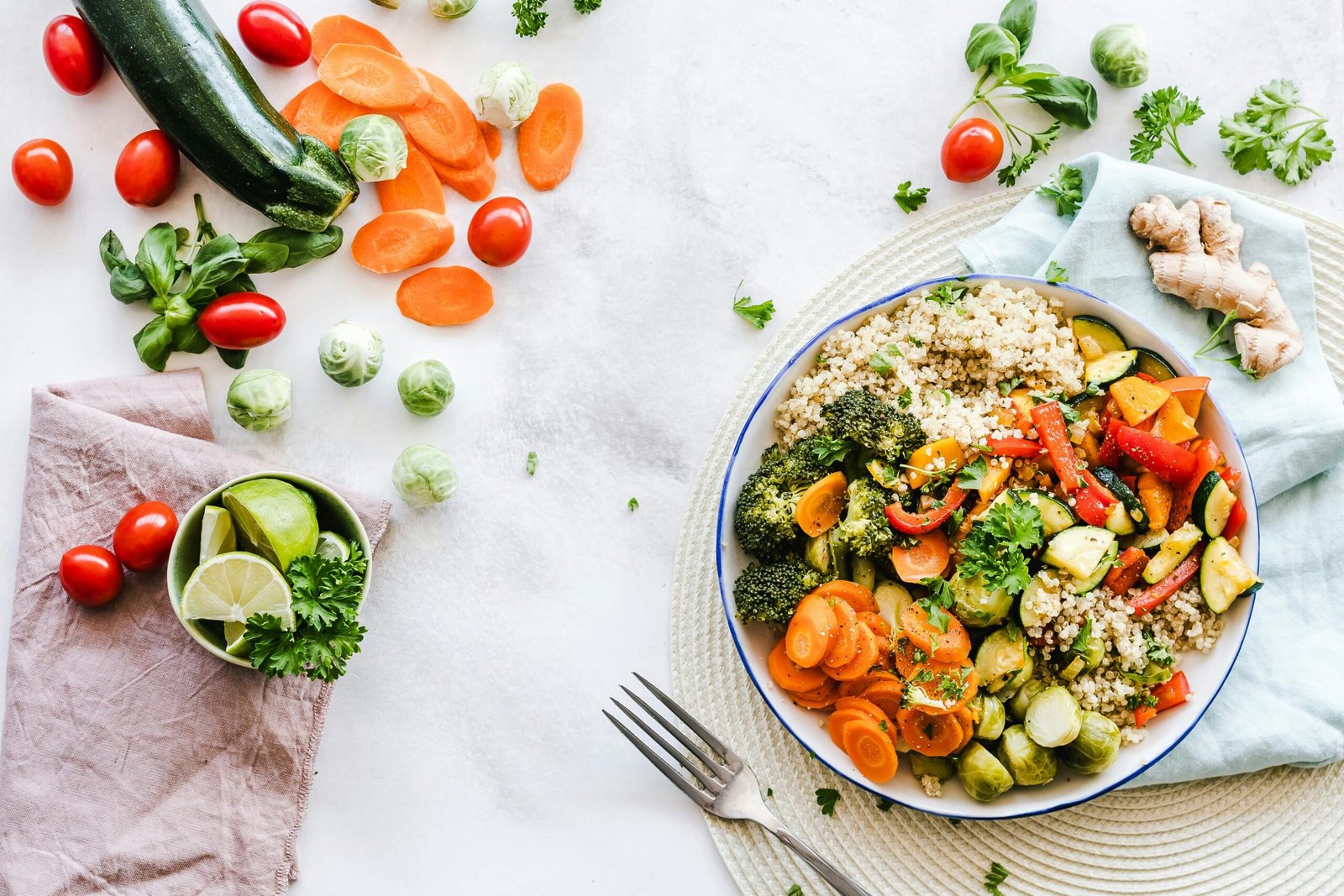
Short answer: yes. Vegetarian and vegan travel in the Philippines is absolutely possible in 2026 — and easier than it has ever been. The country has a reputation for heavy meat-centered cooking, with lechon, adobo, and pork sisig dominating most menus. But behind that reputation is a thriving and fast-growing plant-based food scene that many travelers completely miss.
This guide covers everything a vegetarian or vegan traveler needs to know: which Filipino dishes are already plant-based, how to navigate menus and communicate dietary needs, the best destinations for plant-based eating, and practical tips for every region of the Philippines.
Filipino cuisine is built on a foundation of pork, seafood, and fish sauce. Bagoong (shrimp paste), patis (fish sauce), and seasoning cubes flavored with pork or chicken are added to dishes that look vegetable-based on the surface. Even a plate of stir-fried vegetables at a local eatery may contain hidden animal products.
There is also a language gap to consider. There is no standard Tagalog word for “vegan”. Telling someone you are a vegetarian may lead them to offer you chicken or fish, since many Filipinos interpret vegetarian as simply avoiding red meat. Being specific about every ingredient — meat, seafood, eggs, dairy, fish sauce, and shrimp paste — is essential, especially outside of major cities.
That said, the Philippine vegan and vegetarian community has grown considerably in cities like Manila, Cebu, Baguio, and Siargao. Dedicated plant-based restaurants now serve creative, authentic reinterpretations of Filipino classics. The challenge is mostly in rural areas and smaller islands — but even there, fresh tropical produce and rice make eating well entirely possible.
A surprising number of traditional Filipino dishes are naturally plant-based or can be easily adapted. Knowing these gives you a solid foundation wherever you travel.
Taho — warm silken tofu with arnibal (sweet syrup) and sago pearls, sold by street vendors every morning across the country. Naturally vegan, high in protein, and one of the Philippines’ most beloved street foods.
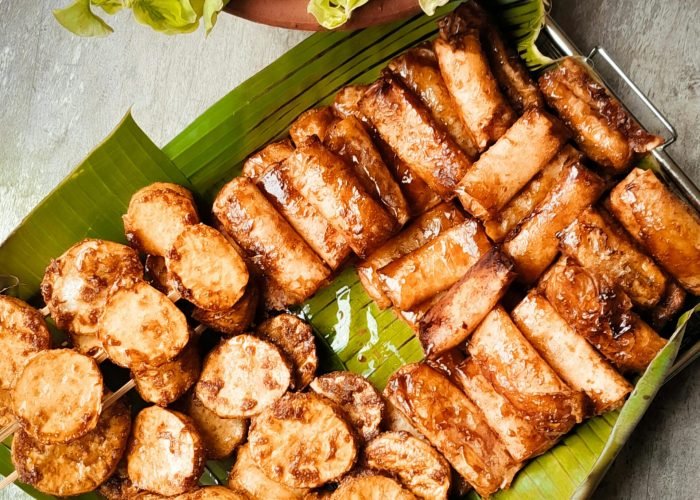
Turon — banana spring rolls fried in sugar. Most versions are naturally vegan; just confirm no egg wash is used.
Suman — sticky rice wrapped in banana leaves, typically sweetened with coconut milk. A naturally vegan snack found at public markets and bus stops throughout the country.
Atchara — pickled green papaya served as a condiment or side dish. Always vegan and packed with flavor.
Sinangag — garlic fried rice. A vegan breakfast staple available almost everywhere, though ask that it is cooked without butter.
Pinakbet — a stew of eggplant, squash, okra, bitter melon (ampalaya), and string beans from the Ilocos region. Traditionally flavored with bagoong, but ask for the version with soy sauce or salt instead.
Chopsuey — a Chinese-Filipino stir-fry of cabbage, carrots, bell peppers, and mushrooms. Request no oyster sauce and no meat for a clean vegan dish.
Ginataang Kalabasa at Sitaw — squash and string beans in rich coconut milk. One of the best naturally vegan comfort dishes in the Philippines when ordered without shrimp or pork.
Laing — taro leaves slow-cooked in coconut milk with chili from the Bicol region. Often vegan by default; confirm no dried fish has been added.
Ginataang Langka — young jackfruit in coconut milk. A hearty, meaty-textured dish that is fully plant-based.
Adobong Kangkong — water spinach cooked adobo-style with vinegar and soy sauce. One of the most reliable vegan side dishes at local eateries.
Lumpiang Sariwa — fresh spring rolls filled with vegetables and tofu. Ask whether egg is used in the wrapper.
Mongo Guisado — sautéed mung bean soup. A Filipino staple that is easily made vegan; ask for no pork or dried fish.
Karioka — deep-fried rice balls with coconut filling. Usually vegan.
Buko — fresh young coconut. Available everywhere near beaches and markets, and endlessly refreshing.
Guinomis — shaved ice with coconut milk, sago, and palm sugar. Vegan and ideal in the heat.
Fresh tropical fruit is your best friend as a vegan traveler. The Philippines produces exceptional mangoes, calamansi, pomelo, jackfruit, and papaya — cheap, abundant, and available nationwide.
Even when a dish appears vegetable-based, watch for these:
Patis (fish sauce) — used as a salt substitute in almost everything, including dishes that appear purely vegetable-based.
Bagoong (shrimp paste) — flavors pinakbet, kare-kare, and many other dishes.
Oyster sauce — common in stir-fried vegetables and chopsuey.
Seasoning cubes (chicken or beef flavor) — added to soups and stews at most local eateries.
Lard — used for frying in traditional eateries and karinderias.
Butter — sometimes added to garlic rice and vegetable dishes.
The phrase “Gulay lang, walang karne” (vegetables only, no meat) is a useful starting point, but you will need to go further for fully vegan eating. Adding “walang patis, walang bagoong” (no fish sauce, no shrimp paste) covers most bases. Learning a few key Filipino phrases before you arrive makes a genuine difference.
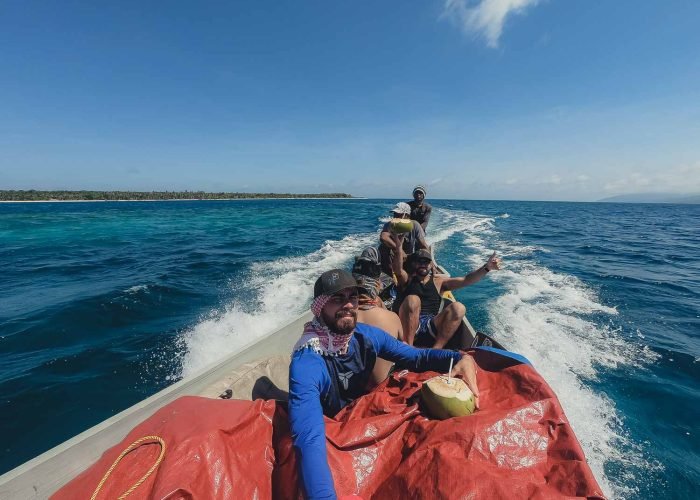
Metro Manila, particularly the Makati and BGC (Bonifacio Global City) districts, has the most developed vegan dining scene in the country. Whether you want Filipino cuisine reinvented without animal products or international plant-based comfort food, you will find it here. Use HappyCow to find current listings and reviews before visiting, as the Manila plant-based scene changes rapidly.
Cebu is the second-largest hub for plant-based dining in the Philippines. The city has a growing community of vegan and vegetarian restaurants concentrated around IT Park and Lahug, with many international backpacker-friendly cafes also catering to plant-based diners. Day trips and island-hopping from Cebu — including Bantayan Island, Mactan, and Moalboal — offer fewer dedicated options, but fresh coconut, grilled vegetables, and rice are universally available.
Baguio’s cool highland climate and Cordillera produce make it one of the most vegetarian-friendly cities outside Manila. The Baguio City Public Market is stocked with outstanding fresh highland vegetables — strawberries, broccoli, lettuce, and carrots that thrive at altitude. Baguio is also a strong base for exploring the Mountain Province and pairs well with a visit to Sagada.
PETA Asia named Siargao Island the Best Vegan-Friendly Tourist Destination in the Philippines — a notable distinction for a small surf island. The concentration of health-conscious international travelers has shaped a food scene with numerous plant-based options, from nourish bowls to veganized Filipino comfort food. Several small locally-owned plant-based eateries have opened in General Luna since 2024, making Siargao increasingly easy to navigate as a vegan traveler.
El Nido has a handful of vegan-friendly cafes catering to the backpacker crowd, particularly along the main strip in town. Options increase during peak season (December–May). Self-catering is practical in El Nido — the local wet market sells fresh produce, and many guesthouses have kitchens or can accommodate dietary requests with advance notice. For more on what to expect in Palawan, see the El Nido adventure tours guide.
Smaller islands in the Visayas — including Siquijor, Bantayan, and Guimaras — are more challenging for strict vegans. Self-catering in a rented guesthouse with kitchen access is the most reliable strategy here. Local public markets offer abundant fresh produce, and moringa (malunggay) — a protein-rich leafy green — is available almost everywhere for very little cost. See the Siquijor Island guide for more on what to expect.
Davao has a growing plant-based community in Mindanao. The city is also the gateway to Mount Apo and is surrounded by productive agricultural land, so fresh produce is plentiful and affordable at local markets.

Supermarkets in major cities have improved noticeably for plant-based shoppers.
Unmeat — the Philippines’ own vegan meat brand, now widely available in major supermarkets nationwide. Products include burger patties, tapa, chicken nuggets, and corned beef. Winner of PETA Asia’s Best Vegan Meat award.
Robinsons Supermarket and SM Supermarket — carry tofu, tempeh, canned legumes, and plant-based milks in major city branches.
Healthy Options — a dedicated health food chain with branches in Makati, BGC, and major malls. The best source for nutritional yeast, specialty plant-based products, and organic produce.
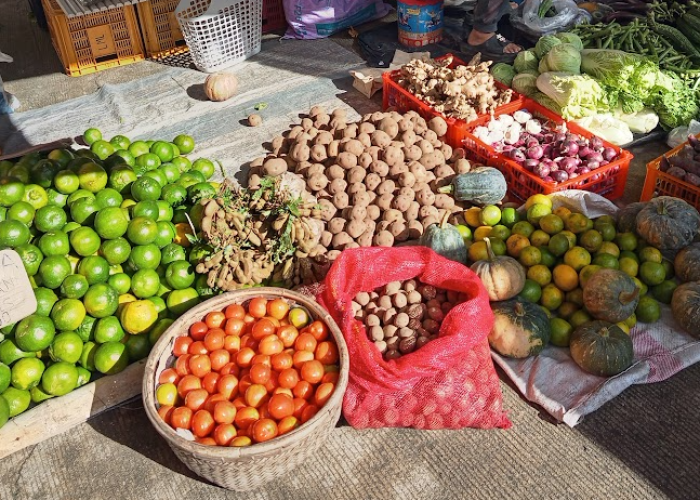
Local public markets (palengke) — the best and cheapest source of fresh vegetables, fruits, tofu (tokwa), and fresh coconut. Prices are a fraction of supermarket rates, and quality is often better.
Plant-based milks are rare outside of international coffee chains. If you rely on oat, soy, or almond milk, stock up in major cities before heading to remote areas, or carry non-dairy milk powder from home.
English is an official language in the Philippines and is widely spoken, which makes dietary communication easier here than in many parts of Asia. However, nuance still matters.
For a broader set of useful phrases, see the Essential Filipino Phrases guide.
At standard Filipino restaurants and karinderias, the safest approach is to ask what vegetables are available and request a simple stir-fry with garlic, soy sauce, salt, and pepper — no oyster sauce, no pork. Tofu (tokwa) is almost universally available and is your most reliable protein source when dedicated vegan restaurants are not nearby.
Chinese restaurants across the Philippines are generally good for vegetarians, with tofu dishes, vegetable dumplings, and Buddhist-influenced menus at some establishments. Korean restaurants, now widespread in major cities, often have clearly labeled vegetarian banchan and tofu stews. Indian restaurants in Metro Manila and Cebu are excellent options with naturally extensive vegetarian menus.

If plant-based eating is a priority, anchor your itinerary around Manila, Cebu, Baguio, and Siargao, and use these as bases for shorter trips to more remote islands. Check the best Philippines destinations by month for trip timing that aligns with good weather and your travel style.
HappyCow is the most reliable tool for finding verified vegan and vegetarian restaurants anywhere in the Philippines. Facebook groups like Vegan Philippines and Plant-Based Philippines also have active communities with current restaurant recommendations, especially for smaller cities and islands where online listings may lag behind reality.
In areas with limited restaurant options — remote islands, provincial towns, or highland destinations — booking a guesthouse or apartment with a full kitchen is the most practical strategy. Combined with a visit to the local palengke (wet market), you can eat very well on a modest budget. Fresh tofu, coconut milk, tropical vegetables, and local spices are available even in small towns.
When heading to remote areas, carry compact backup supplies: nut butter sachets, protein bars, dried fruit, and instant noodles (check the label — many Philippine brands are accidentally vegan). These are invaluable on small islands and during long bus journeys. See the Philippines packing list for broader preparation tips.
Eating plant-based food in the Philippines can be extremely affordable. At a local palengke or canteen, a full vegetable meal with rice costs ₱60–120. At a dedicated vegan restaurant in Makati or BGC, budget ₱300–500 per dish. Fresh fruit is almost universally cheap — a kilo of ripe mangoes often costs less than ₱100 outside of Manila. Many areas are cash-only, so plan accordingly and check the Philippines currency exchange guide before you go.
Understanding why Filipino food culture is so meat-centered helps set realistic expectations. The Philippines experienced over 300 years of Spanish colonial influence, which deeply shaped a cuisine built around pork and seafood. Hospitality (malasakit) and the act of sharing generous meals are core cultural values — being offered meat is often an expression of welcome and generosity, not insensitivity.
When locals express concern that your food “won’t taste good” without meat, it comes from genuine care. Approach dietary conversations with patience and humor. Filipinos are highly accommodating once they understand what you need. For deeper context, the Filipino hospitality and customs guide is worth reading before you arrive.
It is also worth noting that indigenous Filipino diets before Spanish colonization were far more plant-centered. Root crops, leafy greens, legumes, and coconut formed the backbone of daily eating across the archipelago. The tradition of coconut-based cooking (ginataan), fermented vegetables, and foraged greens is a direct link back to that heritage — and a reminder that plant-based eating is not at all foreign to the Filipino palate.
For travelers combining vegetarian and vegan travel in the Philippines with outdoor adventure, planning is especially important. Mountain trekking areas like Mt. Pulag, Mt. Apo, and the Cordillera mountains have very limited food options at ranger stations and campsites.
Carry enough portable plant-based food for the full duration of any trek. Instant oats, dried fruit, nut butter, energy bars, instant miso soup, and dehydrated rice and vegetable meals pack light and provide enough calories for high-altitude exertion. Baguio is the best resupply point before heading into the Cordillera, with its public market and health food stores stocking a wider range of plant-based options than you will find in smaller mountain towns.
For full trekking and camping details, see the complete Philippines camping guide and the first-time hiking guide.
It depends on where you are. Metro Manila, Cebu, Baguio, and Siargao are genuinely vegan-friendly with dedicated restaurants and growing plant-based communities. Rural areas and remote islands are more challenging, though self-catering and fresh produce make them manageable with some preparation.
Reliably safe options include taho, suman, turon, sinangag (garlic rice, cooked without butter), plain steamed rice, fresh tropical fruit, adobong kangkong (ask for no fish sauce), and lumpiang sariwa (ask about the wrapper). At dedicated vegan restaurants, nearly any classic Filipino dish is available in a fully plant-based version.
There is no exact Tagalog equivalent for vegan. The most effective approach is: “Hindi ako kumakain ng karne, isda, itlog, gatas, o pagkain mula sa hayop” — I do not eat meat, fish, eggs, dairy, or food from animals. Always specifically mention patis (fish sauce) and bagoong (shrimp paste), as these are the most common hidden animal ingredients.
Not at all at local markets and karinderias. A vegetable meal with rice costs ₱60–120 at a local eatery. Dedicated vegan restaurants in Makati or BGC run ₱300–500 per dish. Fresh fruit and vegetables from public markets are among the cheapest in Southeast Asia.
Manila (specifically Makati and BGC) has the widest selection of vegan restaurants. Siargao is the most vegan-friendly island destination. Baguio is the best highland option thanks to its climate and abundant fresh produce. Cebu comes second behind Manila for overall plant-based dining variety.
Yes, but flexibility is essential. Fresh coconut, tropical fruit, steamed rice, tofu (tokwa), and simply stir-fried vegetables are available even in remote areas. Self-catering in a guesthouse with kitchen access is the most reliable strategy outside of cities. Carry emergency snacks from the city before heading to remote islands.
Vegetarian and vegan travel in the Philippines in 2026 is not only possible — it can be genuinely rewarding. The plant-based food scene has transformed over the past decade. Manila now rivals many Southeast Asian capitals for creative vegan dining, Siargao has earned recognition as a dedicated vegan-friendly destination, and Filipino chefs across the country are reinventing classics from vegan sisig to plant-based kare-kare.
Approach the Philippines with patience, a few key Tagalog phrases, and a willingness to cook for yourself when needed, and you will eat very well. The combination of spectacular tropical produce, a warm and hospitable culture, and a rapidly growing Filipino vegan community makes this one of the most rewarding destinations in the region for the plant-based traveler.
For broader trip planning, see the complete Philippines travel guide, the most popular destinations in the Philippines, and the Philippines weather guide to time your visit right.


Philippines Travel Guide seeks to share the vibe of an authentic experience through our idea of adventure travel for explorers and memory seekers in the Philippines.


Subscribe our newsletter for more update & news !!
Copyright © 2024. All rights reserved by Philippines Travel Guide.