Getting around Metro Manila can feel overwhelming at first, but once you understand the public transport system, you’ll discover an affordable and surprisingly efficient way to navigate this bustling metropolis. With over 9 million daily commuters relying on jeepneys alone, as well as extensive train networks and bus routes, Manila’s transport ecosystem is among the most comprehensive in Southeast Asia.
Here’s your complete 2026 guide to mastering Manila’s jeepneys, buses, and rail systems.
Metro Manila operates five railway systems as of 2026: LRT-1, LRT-2, MRT-3, and the PNR (Philippine National Railways) North and South Commuter lines. These rapid transit networks are complemented by around 40 operational bus routes and thousands of jeepneys that form the backbone of daily commuting for millions of Filipinos.
The city’s transport system is primarily privately operated, making it unique among major Asian cities. This creates both advantages in terms of extensive coverage and challenges around standardization and reliability. The Department of Transportation (DOTr) oversees regulatory functions and major infrastructure projects across the network.
Planning your first visit to Manila? Our Metro Manila Travel Guide covers everything from top attractions to accommodation tips.
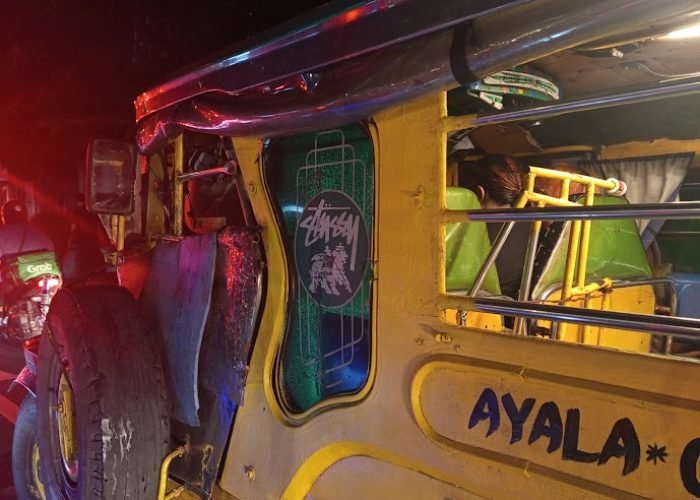
Jeepneys are more than just transportation—they’re rolling pieces of Philippine history and culture. Originally converted from American military jeeps left behind after World War II, these colorful vehicles have evolved into decorated symbols of Filipino ingenuity, adorned with vibrant artwork that represents regional culture, religious themes, and pop culture icons.
Finding Your Route: Jeepneys display their routes on signboards placed on the windshield and sides of the vehicle. Popular routes include Baclaran-Quiapo, Divisoria, and Cubao via España. Unlike buses, jeepneys don’t have designated stations—you can board or alight anywhere along the route except in no-boarding zones.
Boarding: Simply raise your hand to signal the driver you want to ride. The rear of the jeepney is open, making it easy to hop on. During rush hours, expect crowded seating with passengers sitting shoulder-to-shoulder on two facing benches.
Paying Your Fare: As of 2026, the minimum jeepney fare is ₱12 for the first four kilometers, with an additional ₱1.80 per succeeding kilometer. Pass your fare forward to the driver through other passengers—this unique payment system is part of the jeepney experience. Students and senior citizens receive a 20% discount.
Getting Off: Shout “Para!” (which means “stop”) or tap a coin on the ceiling to signal your stop. The driver will pull over at the next safe spot.
New to Filipino phrases? Learn more essential Filipino phrases every traveler should know to enhance their commuting experience.
The Philippine government’s Public Utility Vehicle Modernization Program (PUVMP), launched in 2017, is transforming the jeepney landscape. By January 2026, the Department of Transportation aims to rationalize 50% of jeepney routes, with full completion targeted by the end of 2026.
Modern jeepneys—also called e-jeepneys—feature Euro 4 or Euro 5 compliant engines (or fully electric powertrains), higher ceilings allowing passengers to stand, handrails, security cameras, and improved passenger capacity. While these vehicles cost between ₱1.5-2.8 million (significantly more than traditional jeepneys), they offer safer, more environmentally-friendly transportation.
The modernization program has faced criticism from driver groups concerned about affordability, with the government offering a ₱160,000 subsidy per vehicle and loan programs through Land Bank and Development Bank of the Philippines. The transition is expected to be completed by 2029.
Route: Currently runs 25 stations from Baclaran in Pasay to Roosevelt in Quezon City, with a recent Cavite extension adding stations to Fernando Poe Jr. in Las Piñas (Phase 1 opened November 2024). For official schedules and updates, visit LRTA’s official website.
Coverage: Links Quezon City, Caloocan, Manila, Pasay, Parañaque, Las Piñas, and Bacoor, Cavite.
Key Transfer Points:
Operating Hours: 4:40 AM to 10:10 PM daily
Fares: Updated April 2, 2025, ranging from ₱15-30 depending on distance
2026 Updates: Phase 2 and 3 of the Cavite extension are planned to begin construction in 2026, with completion targeted for 2030. The extension will add 80,000+ passengers daily upon full operationalization.
Route: 13 stations spanning 17.6 km from Antipolo, Rizal to Recto, Manila.
Coverage: Serves Antipolo, Marikina, Pasig, Quezon City, San Juan, and Manila.
Key Stations:
Operating Hours: 4:40 AM to 10:10 PM daily
Fares: Set on August 2, 2023, ranging from ₱15 to ₱ 25
Future Plans: Westward extension from Recto to Manila North Harbor (Tondo) and eastward extension to Cogeo approved for construction.
Route: 13 stations along 16.9 km from North Avenue, Quezon City to Taft Avenue, Pasay. Check MRT-3’s official page for real-time updates.
Coverage: Runs along EDSA (Epifanio de los Santos Avenue), Metro Manila’s main artery, connecting major business districts.
Key Stations:
Operating Hours: 4:40 AM to 10:10 PM daily
Peak Hour Service: Trains arrive every 3-5 minutes during rush hours (7-9 AM and 5-8 PM)
Travel Time: 25-35 minutes for the full route during off-peak; expect crowding during rush hours
Ownership: As of July 2025, fully owned by the Department of Transportation after the 25-year build-lease-transfer agreement with Metro Rail Transit Corporation expired.
Status: Under construction, approximately 83% complete as of June 2025
Planned Route: 22.8 km with 14 stations from San Jose del Monte, Bulacan, to North Avenue, Quezon City
Expected Opening: Partial operations targeted for early 2027; test runs scheduled for late 2026
Impact: Will reduce two-hour bus commutes to just 35 minutes, serving densely populated areas along Quirino Highway, Commonwealth Avenue, and the University of the Philippines Diliman.
Looking for things to do while in Metro Manila? Discover the best adventure tours in Metro Manila for your itinerary.
Current Operations: 26 stations from Gov. Pascual (Malabon) to Biñan (Laguna). Visit PNR’s official website for schedules.
Key Metro Manila Stations:
Service Type: Commuter rail operating on schedule (unlike rapid transit’s high-frequency service)
Exploring Manila’s attractions? Check out the best adventure tours in Manila to make the most of your visit.
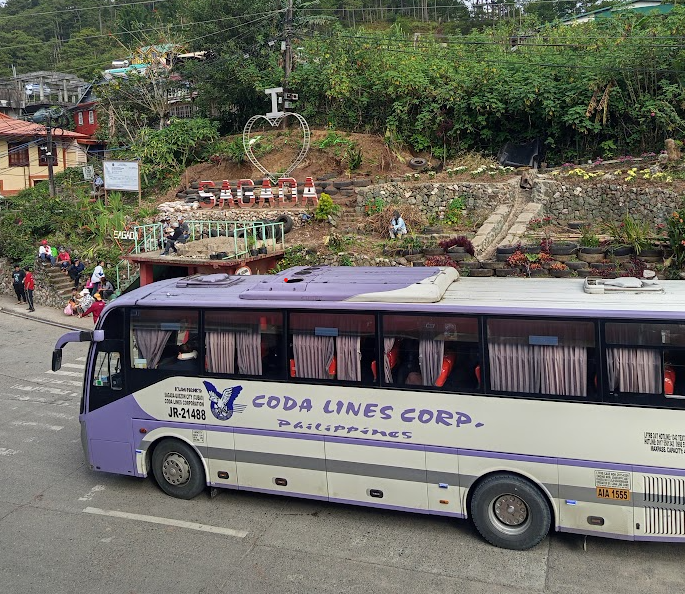
Manila operates two main bus types:
As of 2026, 40+ bus routes operate across Metro Manila, connecting cities within the metro and nearby provinces. Fares start around ₱12-25 depending on route and bus type.
Launched in July 2020, the EDSA Carousel operates dedicated bus lanes along EDSA with 15 designated stops. This Bus Rapid Transit (BRT) system provides faster, more reliable service along Metro Manila’s busiest corridor.
Visiting Manila in February? Discover family-friendly Philippines destinations for February 2026 for your travel plans.
Launched in March 2015, P2P buses provide express service connecting suburbs to central business districts and international gateways. Popular routes include:
These air-conditioned buses offer more comfort and fewer stops, making them ideal for longer commutes.
Since 2021, Quezon City has operated eight free city-wide bus routes as part of the Bus Augmentation Program. Made permanent in 2023, this service has served over 12 million passengers. In October 2024, the city procured eight new electric low-floor buses with wheelchair accessibility and CCTV cameras.
Revived by the Marcos administration in August 2025, this premium bus service operated by the state-owned Metropolitan Manila Transit Corporation connects Valenzuela Gateway Complex to Manila, Pasay, and Quezon City. Two routes currently operate using 20-seater electric minibuses, with free service during peak hours (6-9 AM and 5-8 PM) and for senior citizens and PWDs.
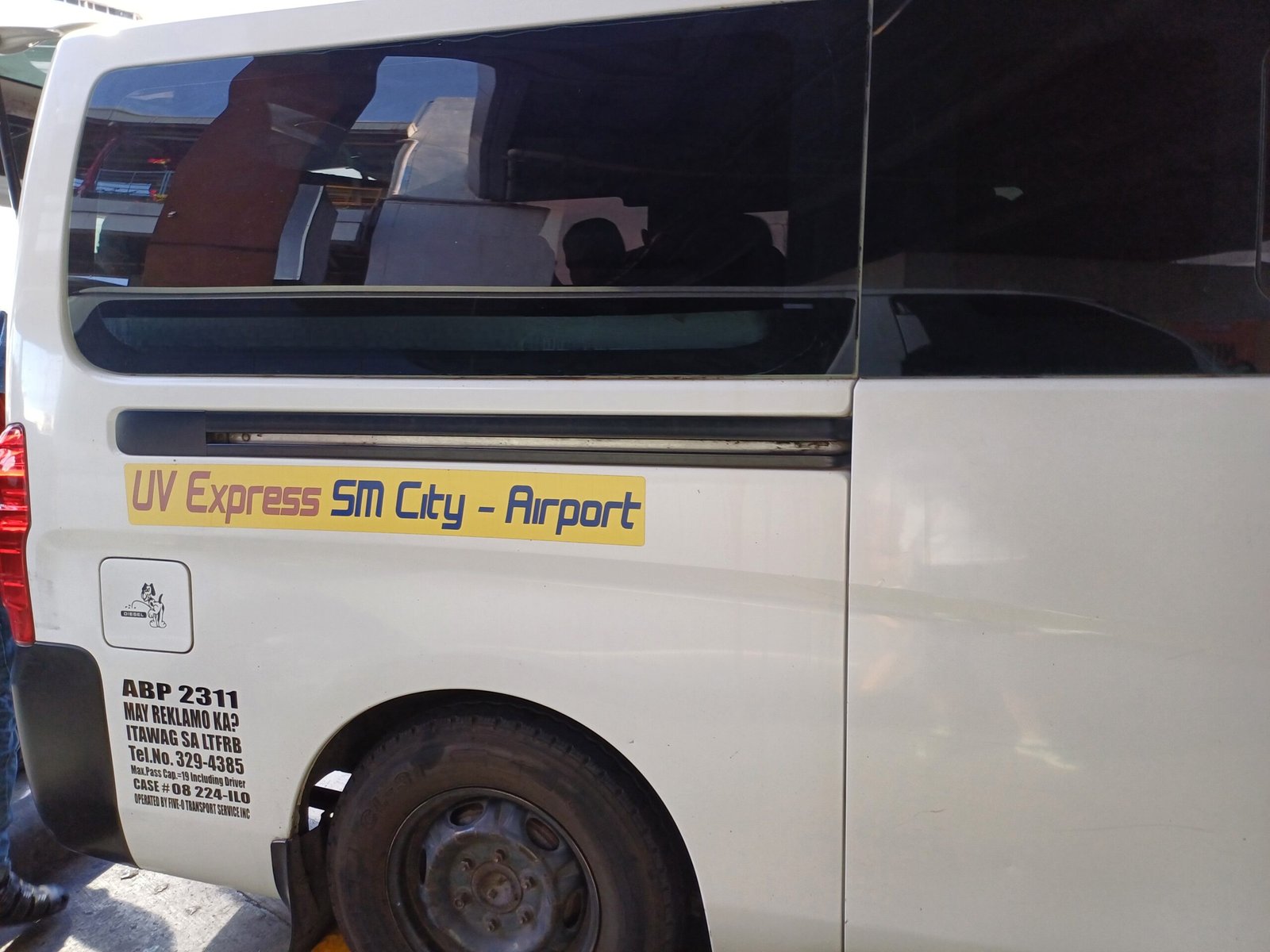
UV Express (formerly known as FX) are air-conditioned white vans operating on fixed routes like jeepneys but without designated stations. Fares range from ₱15 to over ₱60 depending on the route. While more comfortable than jeepneys, maintenance quality varies significantly between operators.
These vans serve both Metro Manila and extend to neighboring provinces like Pampanga, making them popular for medium-distance travel.
The communal nature of Philippine public transport is part of the broader culture of helping one another. Learn more about Filipino hospitality and local customs to better understand your travel experiences.
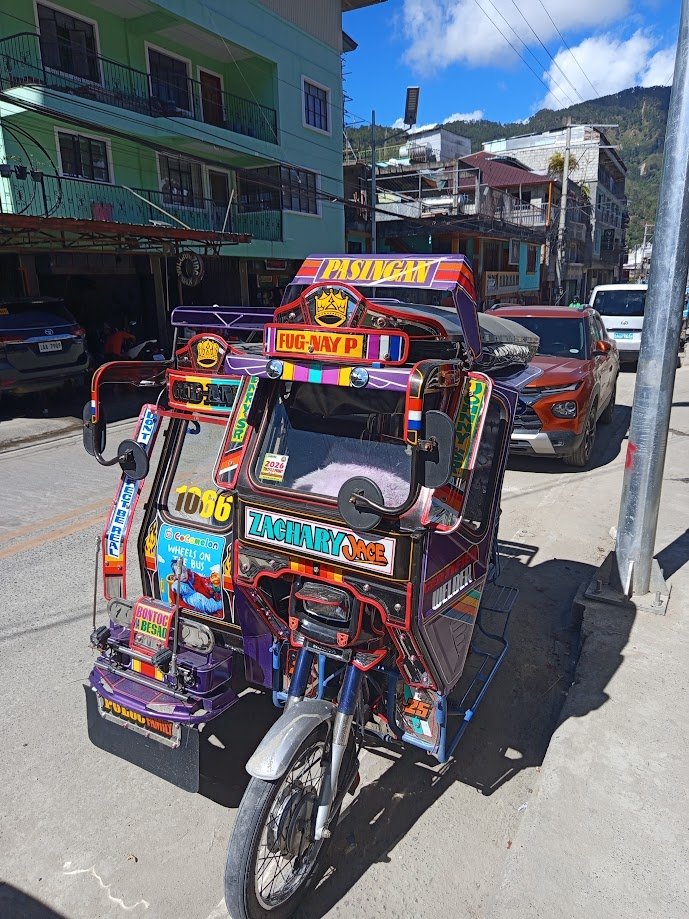
Tricycles are motorized three-wheeled vehicles consisting of a motorcycle with a covered sidecar. They’re the primary mode of transport for short distances within barangays (neighborhoods) and areas not served by larger public transport.
Coverage: Tricycles typically operate within a 2-3 kilometer radius of their designated area. Each has a franchise number and specific routes or zones where they’re allowed to operate.
Fares: Starting at ₱10-15 for short trips, with fares increasing based on distance and number of passengers. Unlike other transport, tricycle fares are often negotiable, especially for longer trips or when hiring the entire vehicle.
Capacity: Officially seats 4 passengers in the sidecar, though in practice you’ll often see more. The driver sits on the motorcycle portion.
Boarding: Flag down a tricycle anywhere along its route or wait at common pickup points near markets, churches, and residential areas. Tell the driver your destination before boarding to confirm they service that area.
Tricycles are ideal for:
Pro Tip: Tricycle drivers often know their neighborhoods intimately and can provide helpful local information. They’re particularly useful for reaching residential areas, small hotels, or Airbnb locations.
White metered taxis operate throughout Metro Manila with standardized fares regulated by the Land Transportation Franchising and Regulatory Board (LTFRB).
Fare Structure (2026):
How to Catch a Taxi:
Important Tips:
Reputable Taxi Companies:
Grab is Southeast Asia’s leading ride-hailing platform, operating extensively in Metro Manila with multiple service options:
Service Types:
Advantages:
Surge Pricing: During peak hours, bad weather, or high demand, fares increase significantly (sometimes 1.5x-3x normal rates).
inDrive (formerly inDriver):
TADA:
Micab:
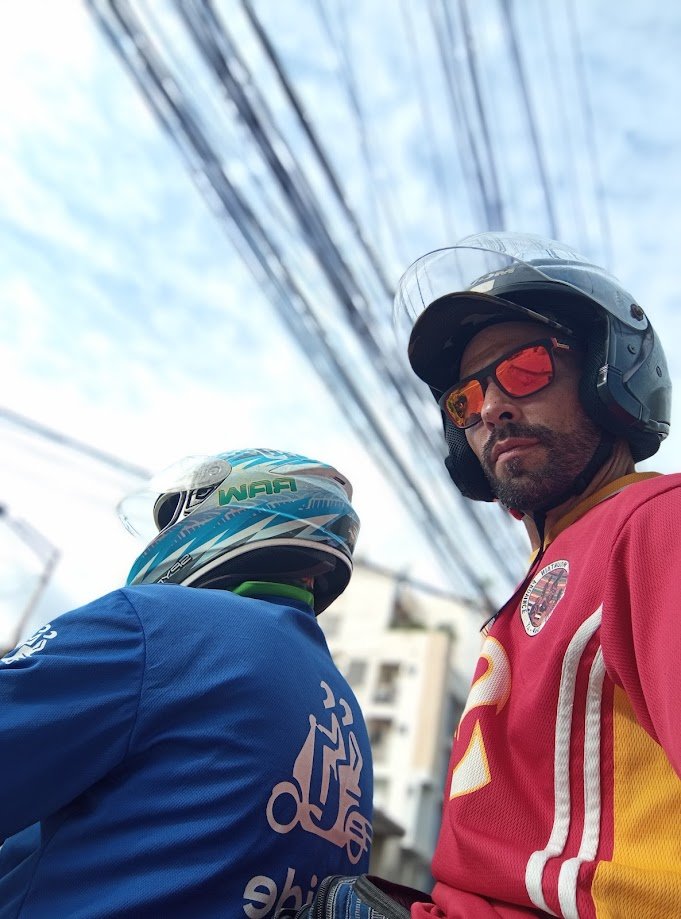
Angkas revolutionized Manila commuting by offering motorcycle taxi services that weave through traffic, dramatically reducing travel time.
How It Works:
Fares (2026):
Safety Features:
Advantages:
Considerations:
A competing motorcycle taxi service operating similarly to Angkas with:
Motorcycle taxis excel in:
Pro Tip: During monsoon season (June-November), motorcycle taxis are less reliable due to rain. Always check weather forecasts before booking.
Understanding when to use each transport mode will save you time and money:
Transport Mode | Best For | Cost Range | Speed | Comfort |
MRT/LRT | Long distances, rush hour, predictable routes | ₱15-30 | Fast | Moderate (crowded peak hours) |
Jeepney | Medium distances, main roads, local experience | ₱12-30 | Slow (traffic) | Basic |
Bus | Long routes, provincial connections | ₱12-60+ | Slow-Moderate | Varies (AC vs non-AC) |
UV Express | Medium-long routes, more comfortable than the jeepney | ₱15-60+ | Moderate | Good |
Tricycle | Short neighborhood trips, specific addresses | ₱10-50 | Slow | Basic-Moderate |
Taxi | Door-to-door, comfort, luggage | ₱40-300+ | Moderate (traffic) | Good |
Grab/Ride-hailing | Convenience, safety, cashless, tracking | ₱50-500+ | Moderate (traffic) | Good-Excellent |
Angkas/Motorcycle | Rush hour, speed priority, solo travel | ₱25-150 | Very Fast | Basic (weather-dependent) |
For Budget Travel: Jeepneys → Buses → MRT/LRT → UV Express
For Speed: Angkas → MRT/LRT → Grab → Taxi → Jeepney
For Comfort: Grab Premium → Taxi → UV Express → Grab → Bus (AC)
For Safety/Security: MRT/LRT → Grab → Taxi → Bus → UV Express
For Authentic Experience: Jeepney → Tricycle → Traditional Bus
For Luggage: Taxi → Grab → UV Express
With Kids/Family: Grab 6-Seater → Taxi → MRT/LRT (off-peak)
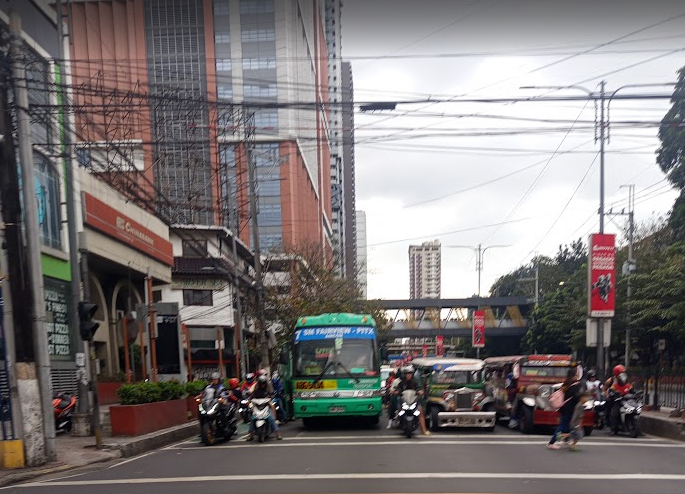
Manila’s transport landscape is rapidly evolving. By 2026-2027, expect:
Once you’ve mastered Manila’s transport system, explore beyond the capital with our guide to the most popular destinations in the Philippines.
Navigating Manila’s public transport in 2026 offers more options than ever before. The combination of traditional jeepneys, modern trains, extensive bus networks, neighborhood tricycles, metered taxis, convenient ride-hailing apps, and traffic-beating motorcycle taxis provides comprehensive coverage across the metro. While modernization programs continue to transform the landscape, the essential character of Manila’s transport—affordable, accessible, and community-oriented—remains unchanged.
Whether you’re a first-time visitor, a new resident, or a daily commuter, understanding these transport options will help you move efficiently through one of Asia’s most dynamic cities. With proper planning, the right payment cards, and useful navigation apps, getting around Manila becomes not just manageable but an integral part of experiencing Filipino urban culture.
Start with the train lines for predictability and speed, explore jeepney routes for an authentic local experience, use tricycles for neighborhood navigation, book Grab or Angkas when you need convenience or speed, and rely on buses for connections the rail system doesn’t cover. Before you know it, you’ll be navigating Manila like a seasoned local, shouting “Para!” with confidence, negotiating tricycle fares, and choosing the perfect transport mode for each journey.
Last updated: January 2026. Transport schedules, fares, and routes are subject to change. Always verify current information with official transport authorities before travel.


Philippines Travel Guide seeks to share the vibe of an authentic experience through our idea of adventure travel for explorers and memory seekers in the Philippines.