Chinese New Year in Manila transforms the capital into a vibrant celebration of Filipino-Chinese culture every late January or early February. This year, the Year of the Horse begins on February 17, 2026, and if you’re in Manila during this time, you’re in for a treat. The city’s massive Chinese-Filipino community—one of the oldest and most integrated in Southeast Asia—goes all out with dragon dances, temple visits, fireworks, and enough street food to keep you eating for days.
I’ve spent the past three Chinese New Year’s in Manila, and what strikes me most is how genuinely woven into the city’s fabric this celebration has become. Unlike some places where it feels like a tourist attraction, here it’s a real cultural moment that locals of all backgrounds participate in. The energy in Binondo during the festivities is something you won’t forget.
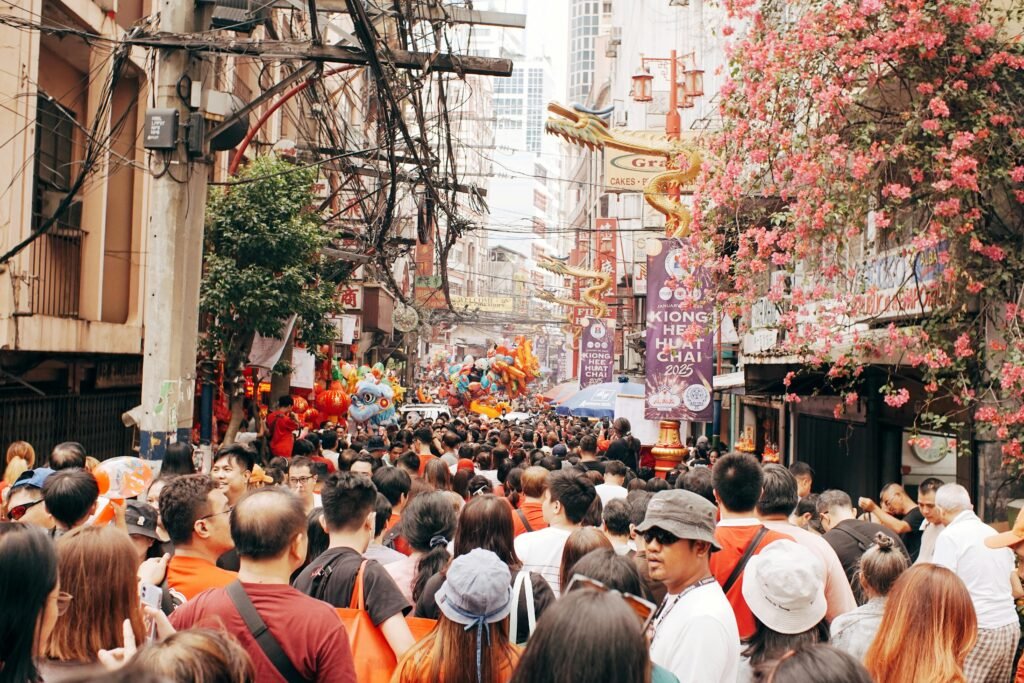
Binondo, Manila’s historic Chinatown and the world’s oldest, becomes the epicenter of Chinese New Year celebrations. The narrow streets around Ongpin Street fill with crowds from early morning through late evening, and honestly, it can feel overwhelming if you’re not prepared for the sheer number of people.
I’d recommend arriving early—by 8 or 9 AM—before the real crush begins. The Binondo Church (Minor Basilica of San Lorenzo Ruiz) holds special masses throughout the day, and watching the mix of Catholic and Chinese traditions here captures something essential about Filipino-Chinese identity. The church gets packed by mid-morning, so early arrivals have a better experience.
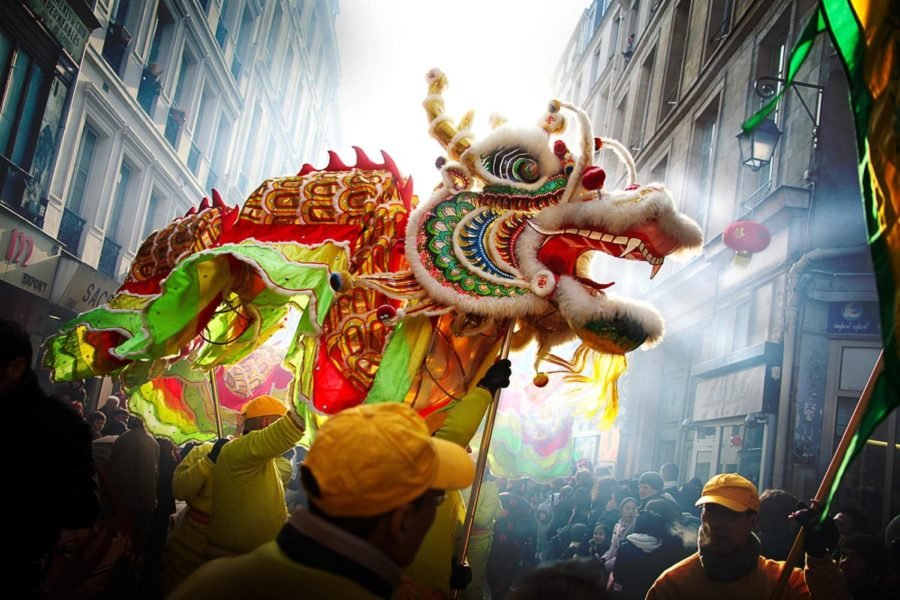
The main parade typically happens along Ongpin Street and surrounding blocks, featuring elaborate dragon and lion dances, marching bands, and traditional Chinese performances. In 2025, the parade started around 1 PM, and I’d expect similar timing for 2026. Get there by noon if you want a decent viewing spot. The performance I watched involved a massive dragon that required at least twenty people to operate—the coordination was impressive, though the firecrackers that accompanied it were deafeningly loud.
One practical note: bring cash. Many of the street vendors and smaller restaurants in Binondo still don’t accept cards, and ATMs in the area run out of money quickly during the celebrations. I’d suggest withdrawing ₱3,000-5,000 before heading over. Our Philippines currency exchange guide has tips on getting the best rates if you’re changing money.
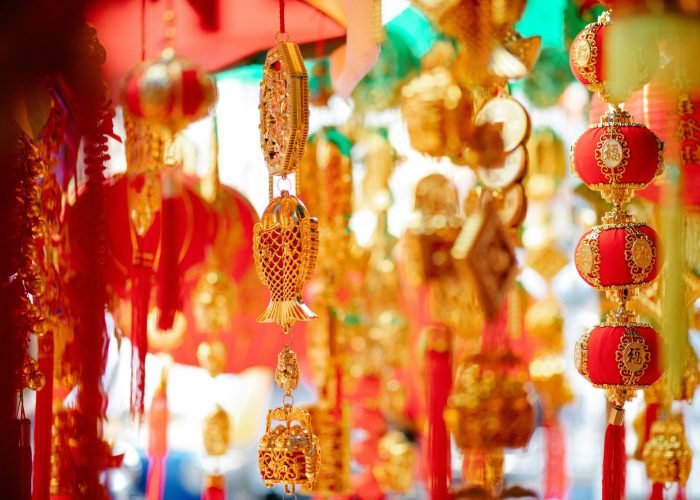
The blocks around Lucky Chinatown Mall and the 168 Shopping Mall area transform during Chinese New Year week. Red lanterns hang from every available surface, and the malls themselves run special promotions and cultural performances throughout the day.
Lucky Chinatown sets up a stage in their outdoor plaza where you can catch traditional Chinese performances, usually running from late morning through early evening. It’s less crowded than the street parade and offers air-conditioned respite if the heat gets to you. I watched a fascinating lion dance performance here in 2024 where the “lions” climbed up poles and performed acrobatic moves that seemed to defy physics.
The shopping itself gets hectic but entertaining. Traditional Chinese New Year items—red envelopes (angpao), decorations, lucky charms—are sold everywhere, along with special holiday foods. If you’re staying in Manila and want to bring home some decorations or gifts, this is your moment. Prices are reasonable, with decorative items starting around ₱50-100.
Several Chinese temples in Manila welcome visitors during the Chinese New Year, though they get extremely crowded. The Seng Guan Temple in San Juan and the Eng Bee Tin Temple in Binondo are two of the most popular.
What I found fascinating was watching the ritual offerings—fruit, flowers, incense, and food carefully arranged and presented. Many Filipino-Chinese families visit multiple temples throughout the day, and the atmosphere is one of genuine devotion mixed with festive celebration. If you visit, dress modestly (covered shoulders and knees), speak quietly, and be respectful when taking photos. Some temples restrict photography in certain areas.
The temples are free to enter, though many visitors make small donations. I’d suggest visiting either very early morning (7-8 AM) or later in the evening after the main rush. Mid-afternoon is chaos.
The food situation during the Chinese New Year in Manila deserves its own section. Binondo’s restaurants and street vendors go into overdrive, and this is honestly my favorite part of the whole celebration.
Tikoy (sticky rice cake) appears everywhere—both plain and fried versions. The fried version, crispy on the outside and chewy inside, costs around ₱30-50 per serving from street vendors. Every Filipino-Chinese family has their preferred tikoy brand, and the debates about which is best run surprisingly deep.
The restaurants along Ongpin Street offer special Chinese New Year menus featuring traditional lucky foods. Eng Bee Tin (famous for their hopia and tikoy) gets absolutely mobbed, with lines stretching down the block. I waited forty minutes last year just to buy a box of hopia. Their original mongo hopia at ₱200 per box makes a great pasalubong (gift), but expect crowds.
For sit-down meals, New Po-Heng Lumpia House serves excellent lumpia (spring rolls) and other Chinese-Filipino dishes in a no-frills setting. A full meal costs around ₱300-400 per person. Wai Ying Fast Food offers quick service and satisfying noodle dishes for ₱150-250. Both get packed during lunch and dinner, so odd hours work better.
Street food vendors set up along the side streets selling everything from fresh spring rolls (₱40-60) to dumplings (₱80-100 for six pieces) to roasted meats hanging in windows. I’d recommend trying the siopao (steamed buns) from vendors near the church—₱35-45 each and absolutely worth it.
Getting to Binondo for the Chinese New Year requires planning. The area becomes increasingly difficult to navigate as the day progresses, and traffic in Metro Manila reaches legendary levels during the celebration.
Take the LRT-1 to Carriedo Station, then walk into Binondo. It’s about a ten-minute walk from the station to the heart of the action. A single LRT journey costs ₱15-30 depending on the distance. Trying to drive or take a Grab into Binondo during the festivities is asking for frustration—I spent ninety minutes stuck in traffic trying to leave the area in 2024.
If you’re coming from outside Manila, check our guide to transport options in Metro Manila for detailed information on navigating the city’s various transit systems.
The crowds can be intense, especially if you’re not used to Philippine-style festivals. I’ve been shoulder-to-shoulder with hundreds of people in spaces that felt far too small for that many humans. If you’re claustrophobic or uncomfortable in dense crowds, consider visiting Binondo a day or two before or after the New Year, when the atmosphere is still festive but less overwhelming.
Pickpockets work the crowds during major celebrations. Keep valuables secure, don’t flash expensive phones or cameras unnecessarily, and consider leaving unnecessary items at your hotel. I use a front-facing crossbody bag during crowded festivals and keep my phone in a zippered pocket.
While Binondo hosts the main action, Chinese New Year celebrations happen throughout Metro Manila. Several malls run special events and performances, often with less crowded, more family-friendly atmospheres.
Mall of Asia typically hosts a Chinese New Year event with performances, food stalls, and decorations. Greenhills Shopping Center in San Juan, known for its Filipino-Chinese community, decorates extensively and runs special promotions. Both offer air-conditioned comfort and easier logistics than Binondo proper.
The Chinese Garden in Rizal Park sometimes hosts cultural performances and displays during the New Year period, though I’d verify this beforehand as programming varies year to year. It’s a quieter way to experience some traditional elements without the intensity of Binondo.
The Year of the Horse should bring similar celebrations to previous years, though exact programming won’t be announced until closer to the date. Based on the pattern from previous years, expect the main parade in Binondo on February 17, 2026, with celebrations continuing through the weekend and into the following week.
The weather in Manila during mid-February is typically dry and warm, with temperatures around 24-30°C (75-86°F). The crowds and lack of shade in Binondo make it feel even hotter, so bring water, wear sunscreen, and dress in light, breathable fabrics. Check our weather guide for the Philippines for more detailed climate information.
Many businesses in Binondo close for several days around the Chinese New Year itself, then reopen with special sales. If you’re specifically interested in shopping rather than festival atmosphere, the days immediately following the New Year often offer better deals and thinner crowds.
Knowing a few Mandarin phrases earns appreciative smiles in Binondo, though most vendors speak English and Tagalog fluently. “Kung Hei Fat Choi” (Cantonese for “Happy New Year”) is the phrase you’ll hear most often. “Xin nian kuai le” is the Mandarin equivalent.
That said, don’t stress about language barriers. The Filipino-Chinese community in Manila has been integrated for centuries, and code-switching between English, Tagalog, and Chinese dialects happens constantly. Our guide to essential Filipino phrases will serve you better for general Manila travel.
Chinese New Year in Manila offers something genuinely special—a celebration that reflects the city’s complex cultural identity rather than a performance for tourists. The crowds can be exhausting, the heat and noise overwhelming, and the logistics occasionally frustrating. But watching generations of Filipino-Chinese families celebrating together, tasting incredible food you won’t find the rest of the year, and experiencing the sheer energy of Binondo during this time makes it worthwhile.
If you’re already planning to be in Manila in mid-February 2026, absolutely work the Chinese New Year celebrations into your schedule. If you’re specifically planning a trip around it, just know what you’re getting into: expect heat, crowds, sensory overload, and some of the best Chinese-Filipino food you’ll ever eat. Come early, bring cash, and leave your expectations of personal space at home.


Philippines Travel Guide seeks to share the vibe of an authentic experience through our idea of adventure travel for explorers and memory seekers in the Philippines.